If you’ve ever felt like no matter how hard you try, your workday just isn’t adding up, you’re not alone. You might worry that you’re lazy, unmotivated, or disorganized, even when you’re following the rules and checking off every task.
Somehow work still feels heavy and productivity becomes something you chase, not something that supports you. Well here’s a new way. Enter: mindful productivity. A better way to get things done sustainably.
What is Mindful Productivity?
Mindful productivity is often described as a blend of productivity and mindfulness. But what matters most isn’t the definition, it’s how it changes your experience of work.
Instead of measuring success by how busy you look or how much you get through, mindful productivity invites you to pay attention to how you’re working. When do you feel focused? When do you feel depleted? When are you pushing simply because stopping feels uncomfortable?
From there, productivity becomes less about forcing output and more about designing your days in a way that actually works for you. You work with your energy instead of against it, focus intentionally, and allow genuine rest to avoid burnout.
Science even backs this approach. Based on a 2021 study, mindfulness and meditation practices were found to strengthen attention and executive control, helping you sustain focus and filter distractions more effectively.
Why Traditional Productivity Often Falls Short
Most productivity systems focus on organizing tasks. What they rarely account for is how your attention, energy, and creativity naturally fluctuate.
Many systems assume you can focus whenever you need to and push through low-energy moments without consequences. If you’ve ever followed a “perfect” plan and still felt exhausted, you know this isn’t realistic.
Think of your work like a garden. You can plant seeds, water them, and provide sunlight, but growth doesn’t happen on demand. Some days the soil is rich, some days it’s dry. Some plants grow faster, others slower. You can’t speed up the seasons, and you can’t force every seed to bear fruit at once.
Work works the same way. Some days you might write three blog posts, and other days, even a single paragraph takes hours. That’s normal. It doesn’t mean you’re failing. Mindful productivity teaches you to work with these natural rhythms instead of fighting them.
Core Principles of Mindful Productivity
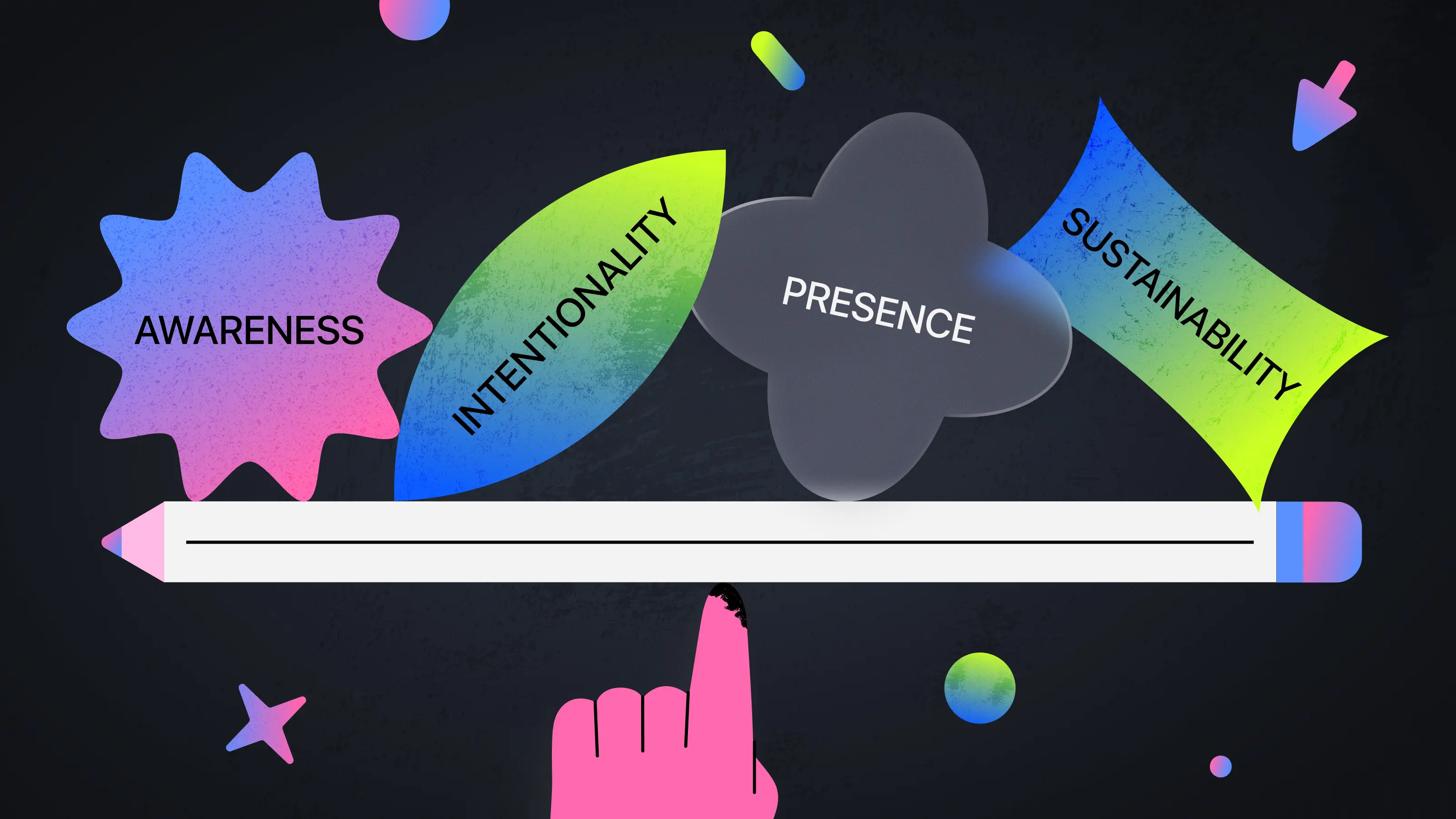
At the heart of mindful productivity are a few guiding principles that help you get more done without feeling like every day is a struggle. Applied consistently, these principles sharpen focus, spark creativity, and make your work feel genuinely fulfilling. Here’s how you can approach mindful productivity.
Step 1: Awareness
Awareness is about noticing your natural rhythms, your mental and emotional patterns, and where attention slips. Think of it like checking the weather before planting seeds. You can’t force growth if you don’t know what conditions you’re working with. Awareness is your ability to read the day, and yourself, accurately so you can make smarter choices about what to tackle and when.
Step 2: Intentionality
Intentionality is about translating what you’ve noticed into purposeful decisions. You’re no longer reacting to every notification or request; you’re choosing where to spend your effort. For example, deciding to block two hours for writing during your peak energy window instead of scattering it across tiny, interrupted chunks of time. Intentionality is where insight meets action.
Step 3: Presence
Presence isn’t just focus; it’s fully engaging with what you’re doing without judgment or distraction. It’s about being there for the task — whether drafting a proposal or having a team call — and noticing the difference when your mind isn’t hopping ahead to the next thing. Presence lets you perform more deeply and feel less mentally scattered.
Step 4: Sustainability
Sustainability isn’t about pacing today; it’s about building a way of working that lasts. It means creating habits and schedules that keep you productive without wearing you down. This can look like honoring high-energy periods, resting when needed, and designing workdays you can sustain over weeks and months. It turns productivity into a durable, enjoyable practice rather than a short-lived sprint.
Techniques for Mindful Productivity
Now, mindful productivity isn’t about cramming more into your day, it’s about focusing on what truly matters and working in tune with your body. Here’s how you can bring it to life in your daily routine:
Identify Your MITs (Most Important Tasks)
Start by asking yourself: What are the 1–3 tasks that will make the biggest difference today? Maybe it’s drafting that proposal, finishing a report, or preparing for a key meeting. Focusing on MITs keeps you from spinning your wheels on small, low-impact tasks that leave you feeling busy but unaccomplished. Imagine ending your day knowing you’ve actually moved the needle, that’s the payoff of mindful prioritization.
Schedule Deep Work Around Your Energy Peaks
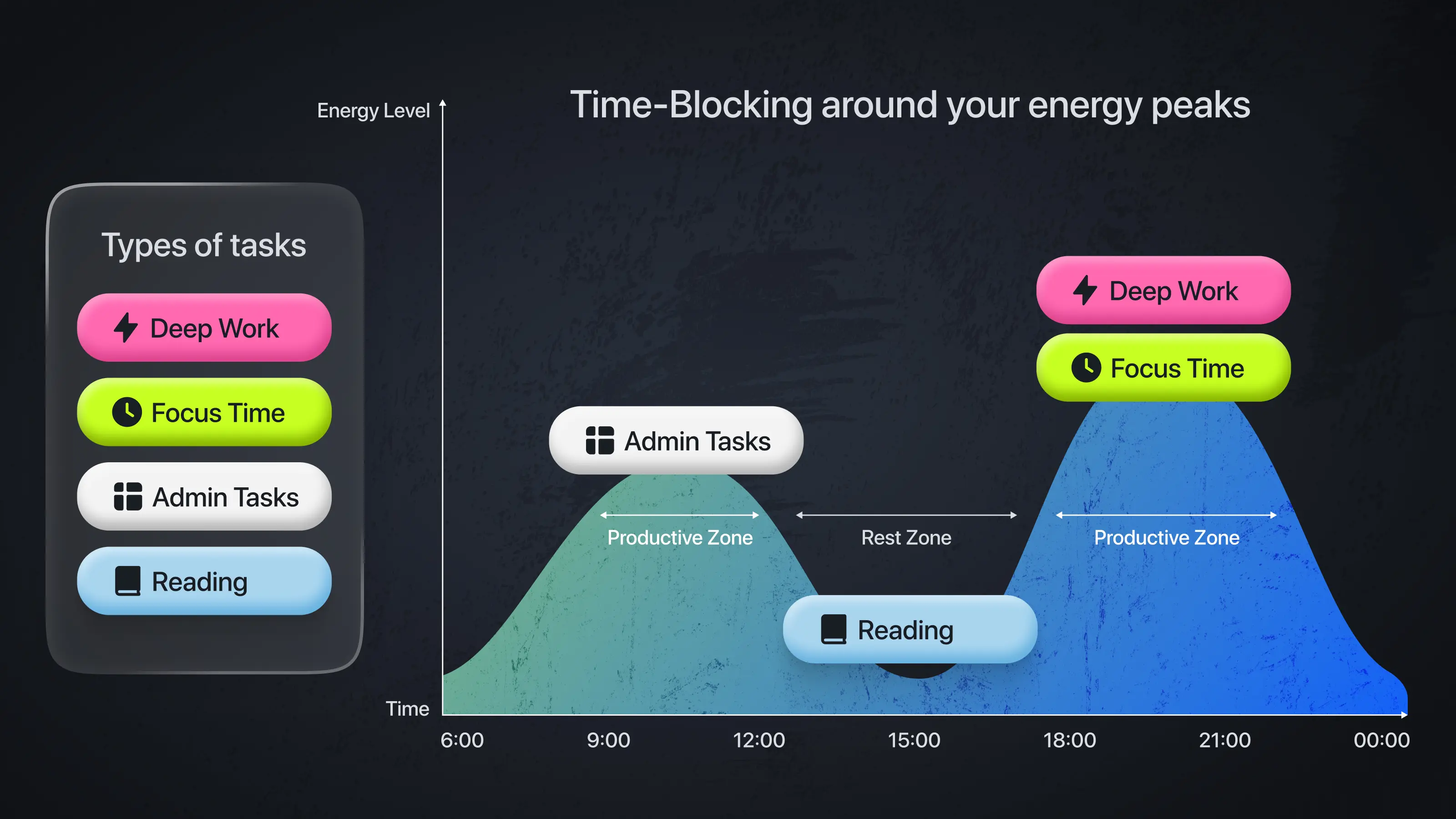
Not every hour is equal. You might notice that your mornings are when your ideas flow effortlessly, while afternoons feel like wading through molasses. Mindful productivity means aligning your most demanding tasks with these natural focus windows. Time-block your deep work (writing, designing, problem-solving) when you’re most alert, and save lower-energy tasks, like email or administrative work, for the rest of the day.
Create a Focus-Friendly Environment
Your surroundings play a bigger role than you might think. A cluttered desk, constant notifications, or even a noisy room can silently chip away at your attention. Mindful productivity encourages you to shape your environment for focus. Mute distractions, clear surfaces, or set up a dedicated corner for concentration. Small changes here can make it much easier to slip into the flow state that makes work feel effortless.
Build Mindful Breaks into Your Day
Breaks aren’t downtime, they’re fuel for your brain. Step away from the screen, take a short walk, meditate, or simply stretch. Even five minutes of intentional rest can reset your focus and prevent that creeping mid-afternoon fog from taking over. Think of it as a mini recharge for your mind.
Practice Self-Compassion
No matter how well you plan, some days won’t go as expected. Tasks may take longer, energy may dip, or distractions may sneak in. Mindful productivity isn’t about perfection, it’s about noticing when things veer off track, adjusting without judgment, and learning from the experience. Treat yourself like a teammate, not a taskmaster. A little self-compassion goes a long way toward sustaining both focus and motivation over the long run.
How Calendars by Readdle Lets You Live Mindful Productivity
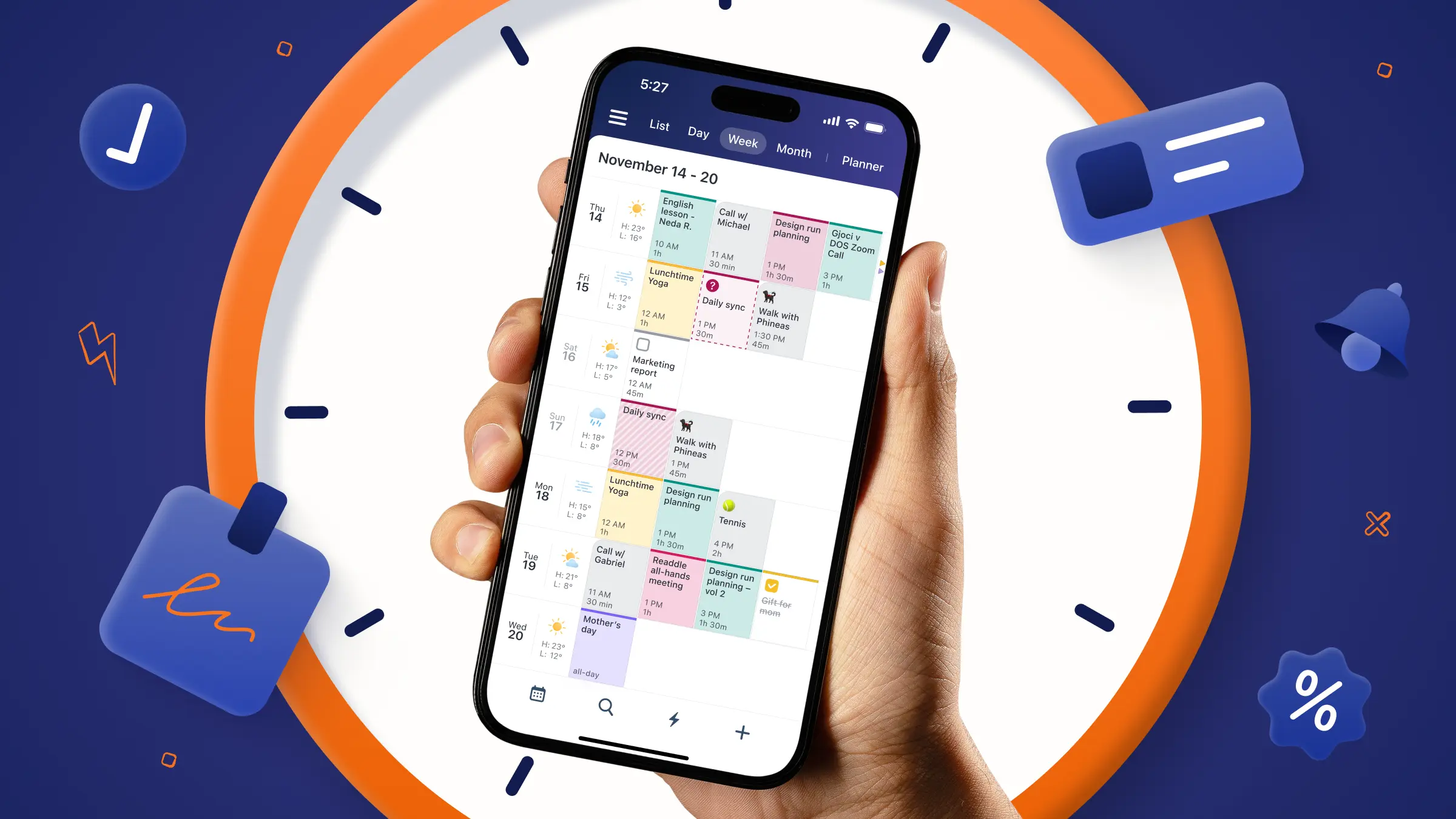
Reading about mindful productivity is one thing and actually feeling it in your day-to-day life is another. That’s where Calendars by Readdle stands apart. This isn’t just a calendar or task manager; it’s a personal guide for your focus, energy, and habits, helping you turn mindful productivity from an idea into a lived experience.
Imagine your calendar as more than a list of events. It’s a space that honors your natural rhythms, nudges you toward what matters, and gives you insight into how your mind and body respond to your schedule. That’s what makes Calendars different from other productivity tools. It's designed not just to organize your day, but to help you live it intentionally.
Time-Blocking Around Your Energy Peaks
Some hours feel effortless, others sluggish. With Calendars, you can schedule your most important tasks during your natural focus windows, turning deep work into something that flows rather than feels forced. You’re no longer pushing through your day blindly; you’re working with your energy, not against it.
Build Lasting Habits With Habit Tracker
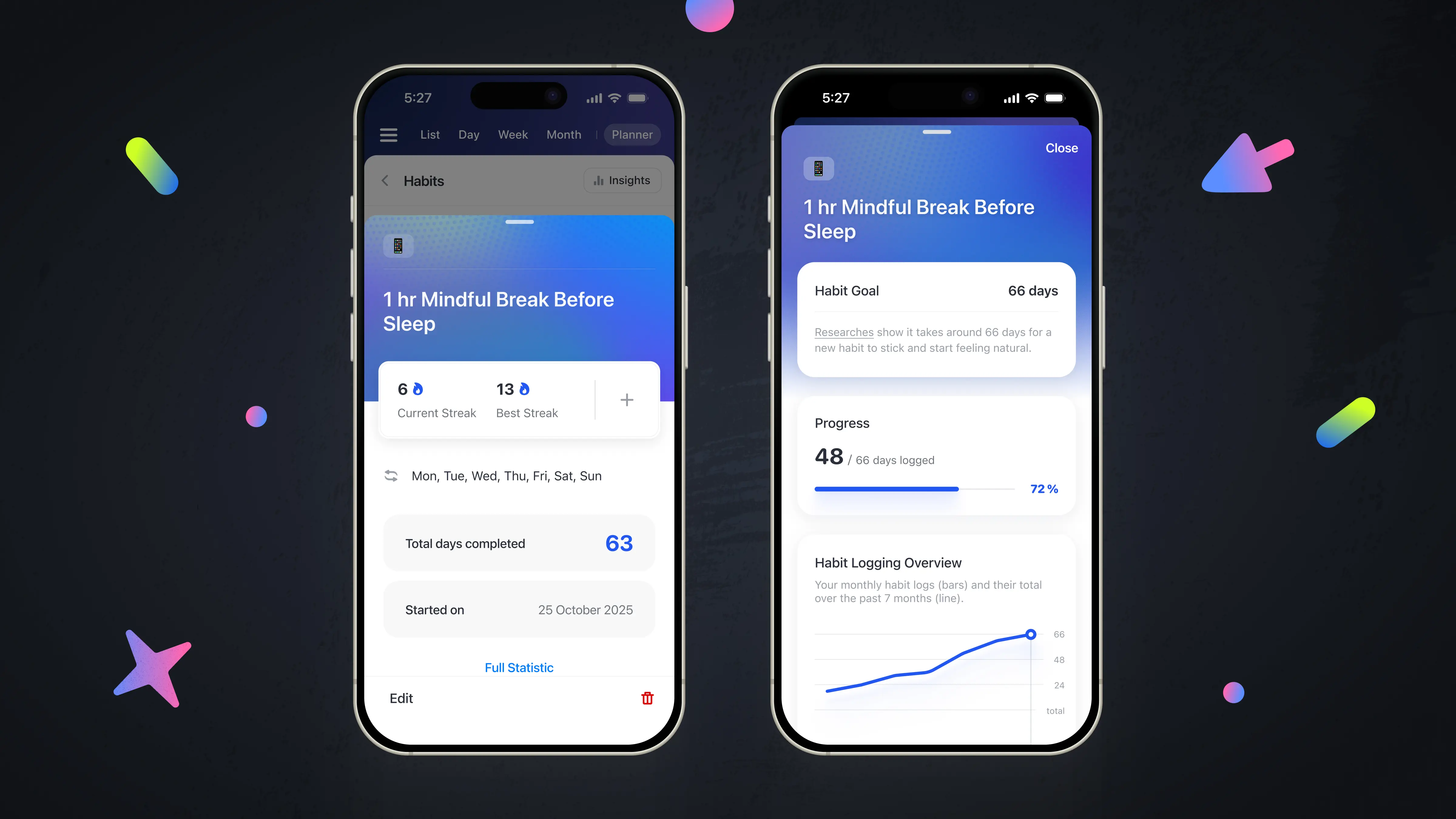
Small habits, like a daily focus block, a mindful break, or a shutdown routine, are the foundation of sustainable productivity. Habit Tracker lets you set, track, and celebrate these habits, turning intentions into routines without guilt. Over time, these small habits compound into meaningful changes, giving structure and clarity to even the busiest days.
Reflect and Learn With Personal Reflections
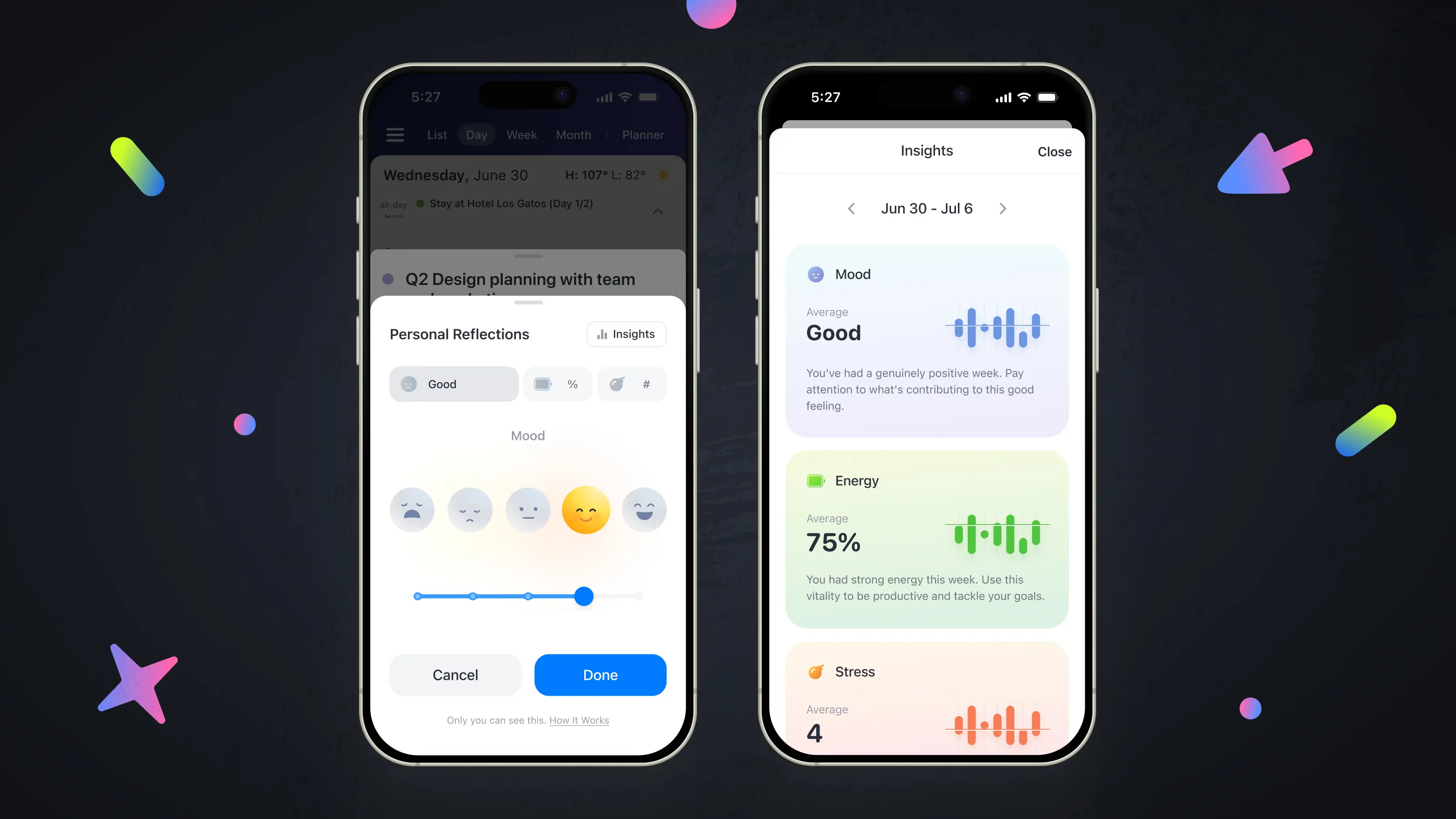
Mindful productivity isn’t only about doing; it’s about noticing. Personal Reflections lets you track your mood, energy, and stress alongside your tasks and events. Over time, you’ll see patterns that reveal what fuels you, what drains you, and how to plan days that truly work for you. And the best part? All this insight is private and fully yours, so you can be honest without worrying about judgment.
Deepen Your Practice With the Mindful Productivity Masterclass
Calendars helps you build all these skills inside the Mindful Productivity Masterclass, a 20-lesson program packed with short, actionable, science-backed steps.
Before diving in, you can take a short quiz to discover your productivity type. This helps the Masterclass customize lessons and missions based on what would help you the most. Whether you thrive on structured routines, bursts of creative energy, or flexible focus windows, the program adapts to guide you toward strategies that actually fit your natural style.
Each lesson comes with integrated missions to practice what you learn immediately using Calendars and your iPhone.
Try a Simple Experiment Today
Start small. Schedule one deep work block and one mindful break. Track them with Habit Tracker and Personal Reflections, and notice how your day shifts when you work with intention, honor your energy, and pause deliberately. Small adjustments like this add up quickly and Calendars makes it easy to see and celebrate your progress.
Start the Mindful Productivity Masterclass in Calendars today and take the first step toward a more focused and enjoyable workday.