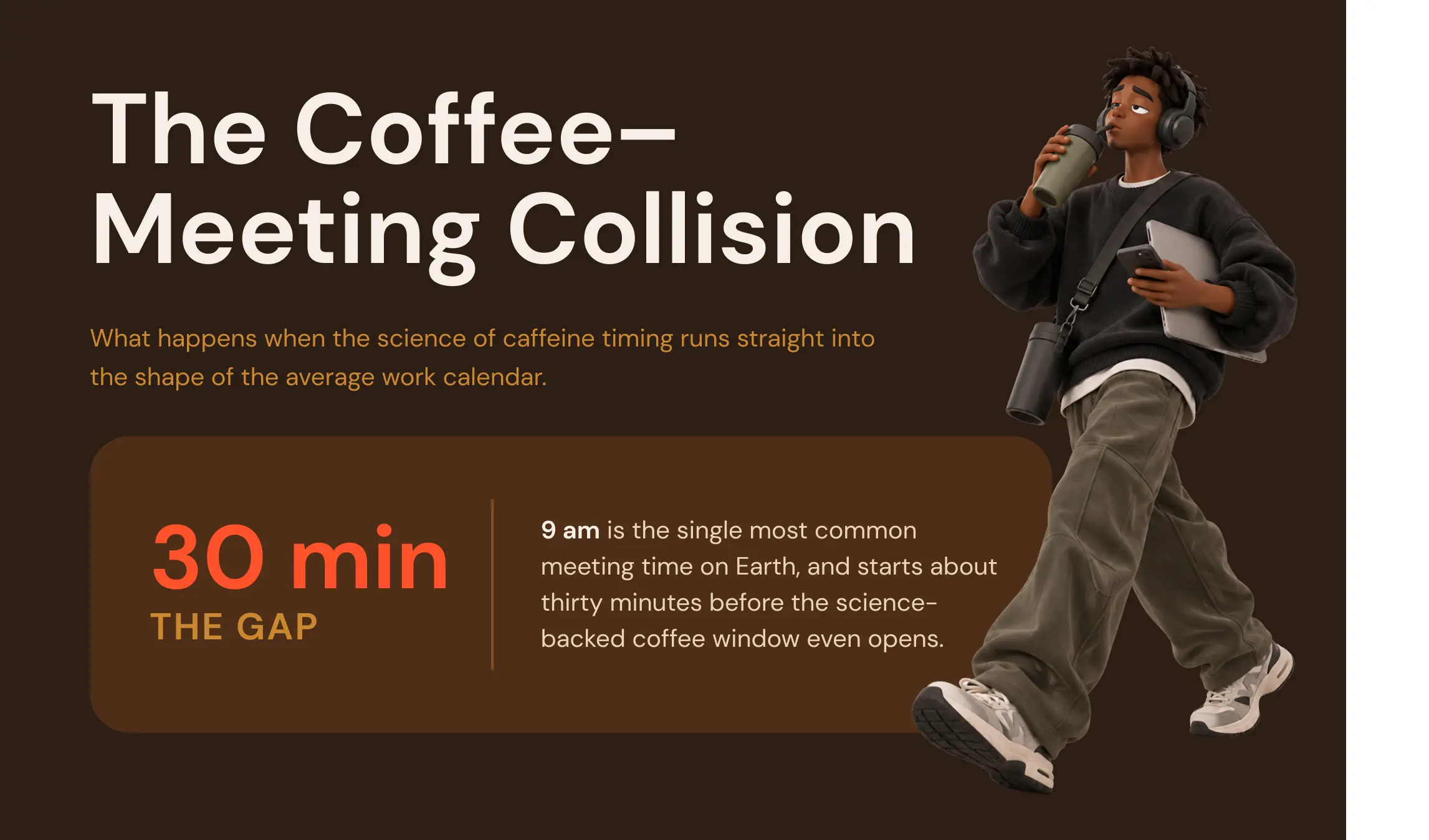
Here's a strange coincidence to sit with on International Coffee Day: the single most common meeting time on Earth is 9 am. The science-backed window for your first cup of coffee doesn't open until 9:30.
So every day, in offices and home offices everywhere, many of us walk into our first call of the day about thirty minutes before our coffee would actually start working with our biology instead of against it.
It gets stranger the closer you look.
That 9 am overlap isn't a one-off, either. It happens again in the early afternoon, right when a lot of us are reaching for another cup, and a lot of calendars are packed with meetings.
Somehow, without anyone planning it that way, the human body clock and the modern calendar keep circling back to the same hours. We call it the coffee-meeting collision.
When coffee actually works
Coffee doesn't work the way most of us think it does.
The moment you wake up, your body is already flooding itself with cortisol, a natural spike that typically peaks 30 to 60 minutes after you open your eyes, rising 50 percent or more. That's your body's own built-in alarm clock. Pour caffeine on top of that first thing, and you're mostly just piling stimulation onto stimulation you were already getting for free.
Cleveland Clinic's guidance, based on this rhythm, puts the sweet spot for your first cup somewhere between 9:30 and 11 am, once that natural morning spike has started to fade and caffeine finally has something useful to do. A second cup around 2 pm can help with the very real energy dip most people hit in the early afternoon. Outside those windows, you're not drinking bad coffee. You're just drinking it at the wrong time.
Meanwhile, your calendar has other plans
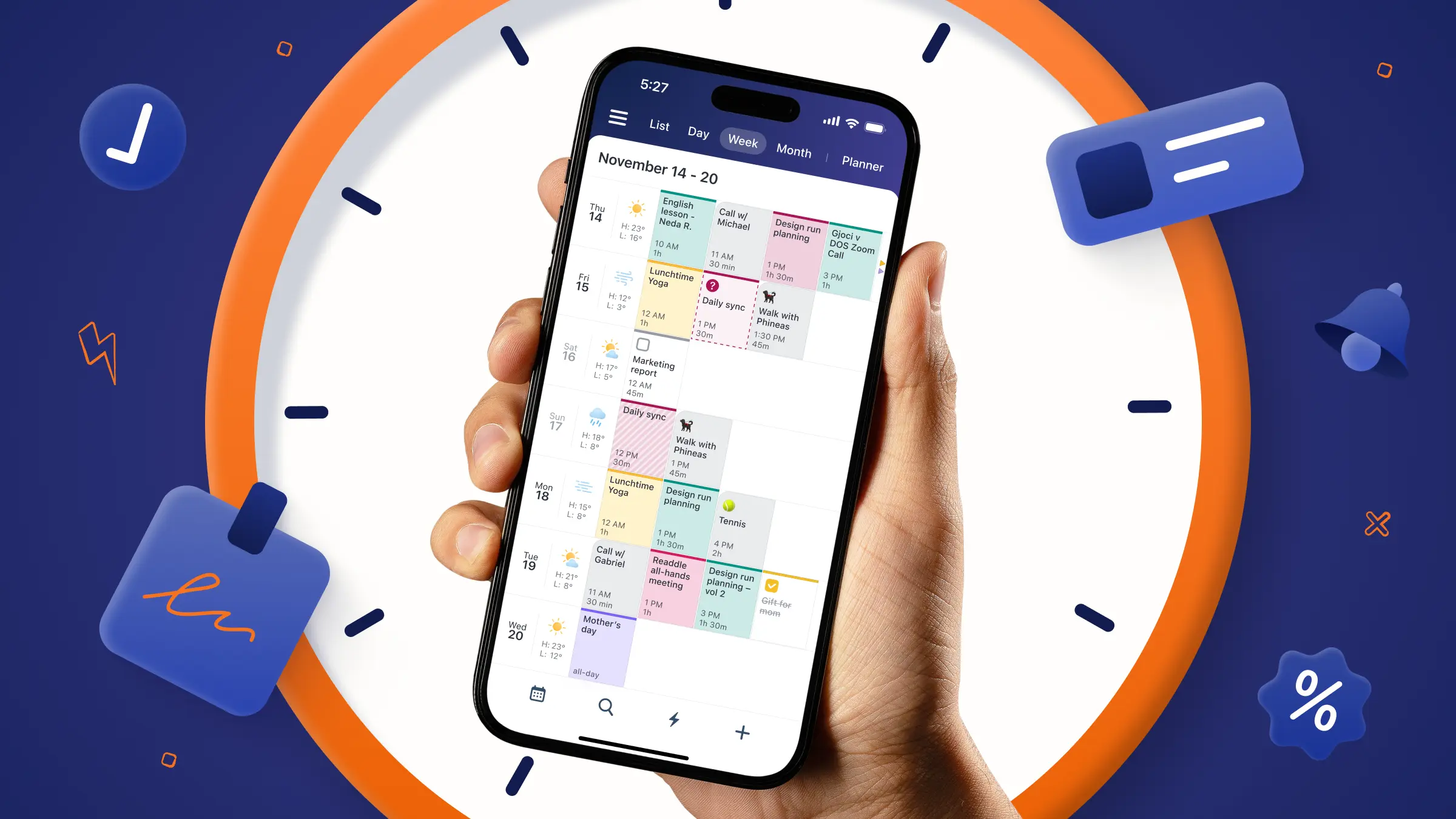
An analysis of 50.9 million hours of meetings by the scheduling platform Supernormal found that the single most popular meeting slot in the world is 9 am Eastern, capturing more than 9% of every meeting scheduled globally. Separately, Microsoft's own research into workplace patterns found that a full 50% of all meetings fall inside just two windows: 9 to 11 am and 1 to 3 pm. And 12% of meetings start before 9 am altogether, before most people should really be relying on coffee for much of anything.
Both Supernormal and Microsoft independently found Tuesday to be the busiest meeting day and Friday the quietest.
The collision
Put the two side by side, and the picture is hard to miss.
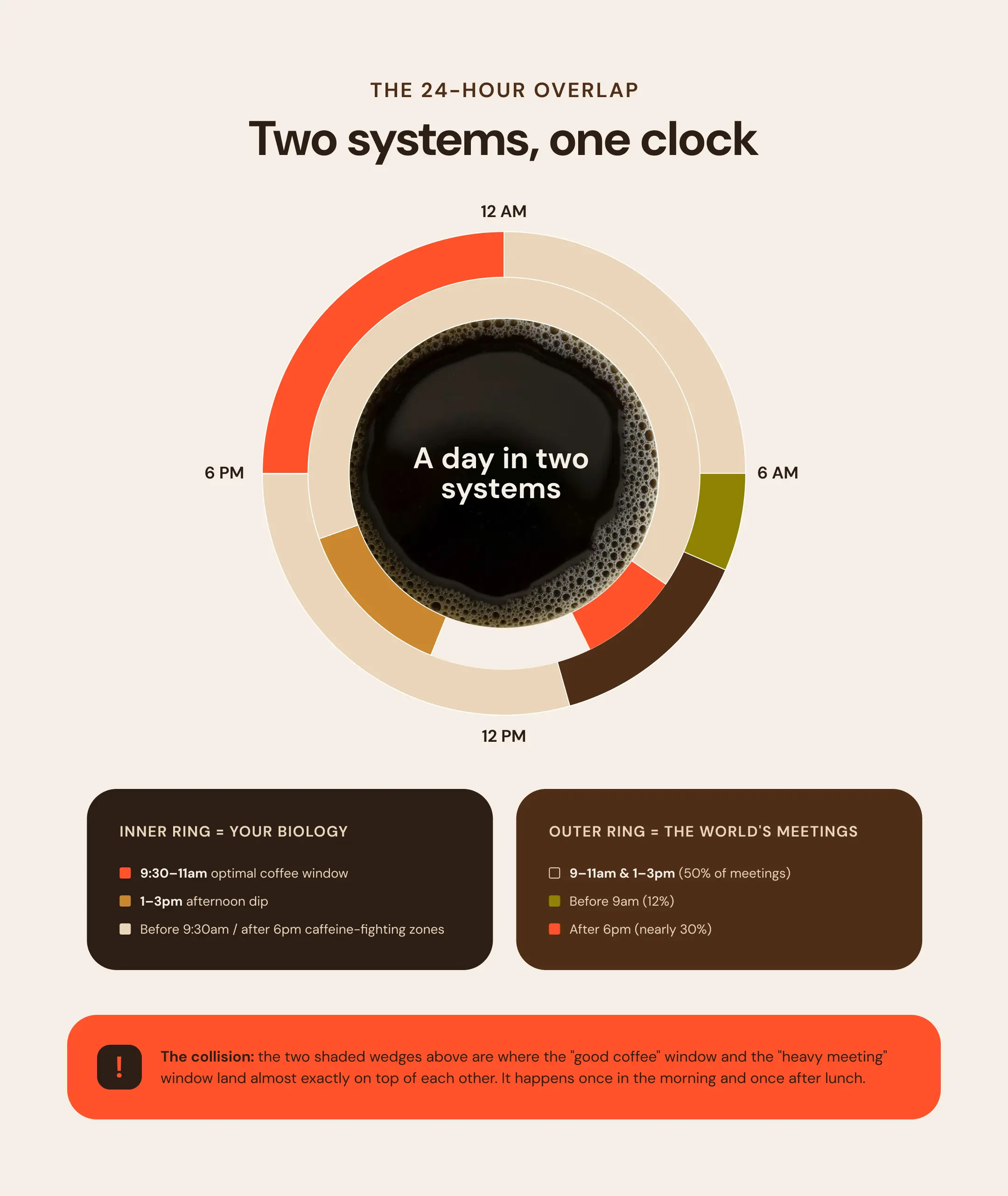
Science says the best time for your first coffee is 9:30 to 11 am, once your body's natural cortisol surge has started to fade, and the same body clock hits a real energy dip again in the early afternoon. Almost exactly on top of both windows, the world's calendars have gone and concentrated half of all meetings.
The single most common meeting time on Earth starts thirty minutes before the "good" coffee window even opens, and 12% of meetings happen before that window opens.
It's not that anyone is doing coffee wrong. The average calendar and the average body clock are quietly fighting each other every day.
Why timing beats volume
This isn't just a fun scheduling quirk. It might actually matter for your health. A 2025 study out of Tulane University, published in the European Heart Journal, followed 40,725 US adults for nearly a decade and found that people whose coffee stayed concentrated in the morning had 16% lower all-cause mortality and 31% lower cardiovascular mortality than people who didn't drink coffee at all. People who spread that same amount of coffee across the day (sipping through back-to-back meetings, essentially) saw no real benefit. It was the same coffee. Only the timing was different, and apparently, that's what counted.
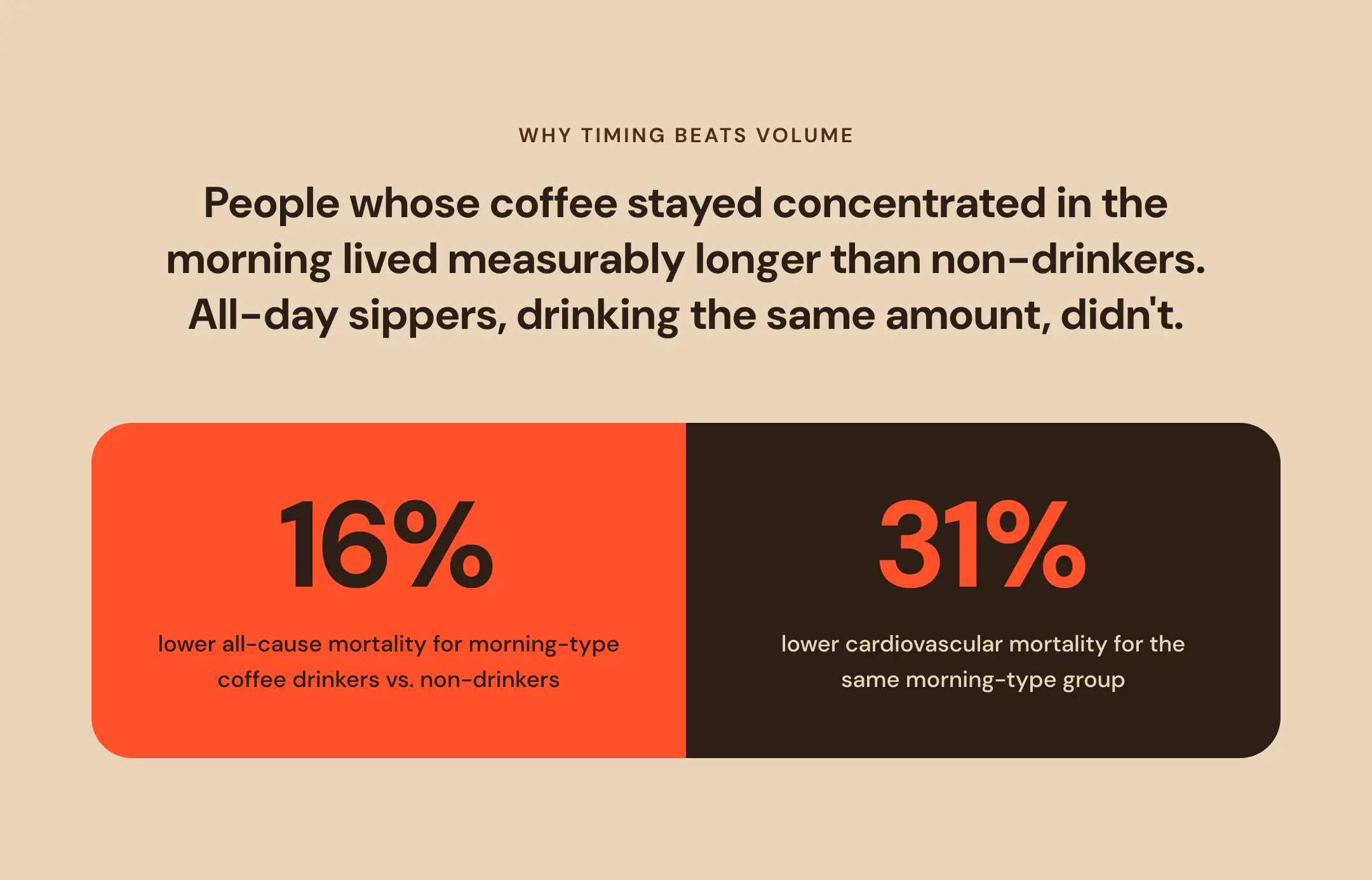
As the study's lead researcher, Dr Lu Qi, put it: "Consuming coffee in the afternoon or evening may disrupt circadian rhythms and levels of hormones such as melatonin." It's worth saying plainly that this is an association from a large, peer-reviewed study, not a guarantee. But it's a genuinely good reason to protect a real morning coffee ritual instead of letting your calendar dissolve it into an all-day drip.
The caffeine curfew
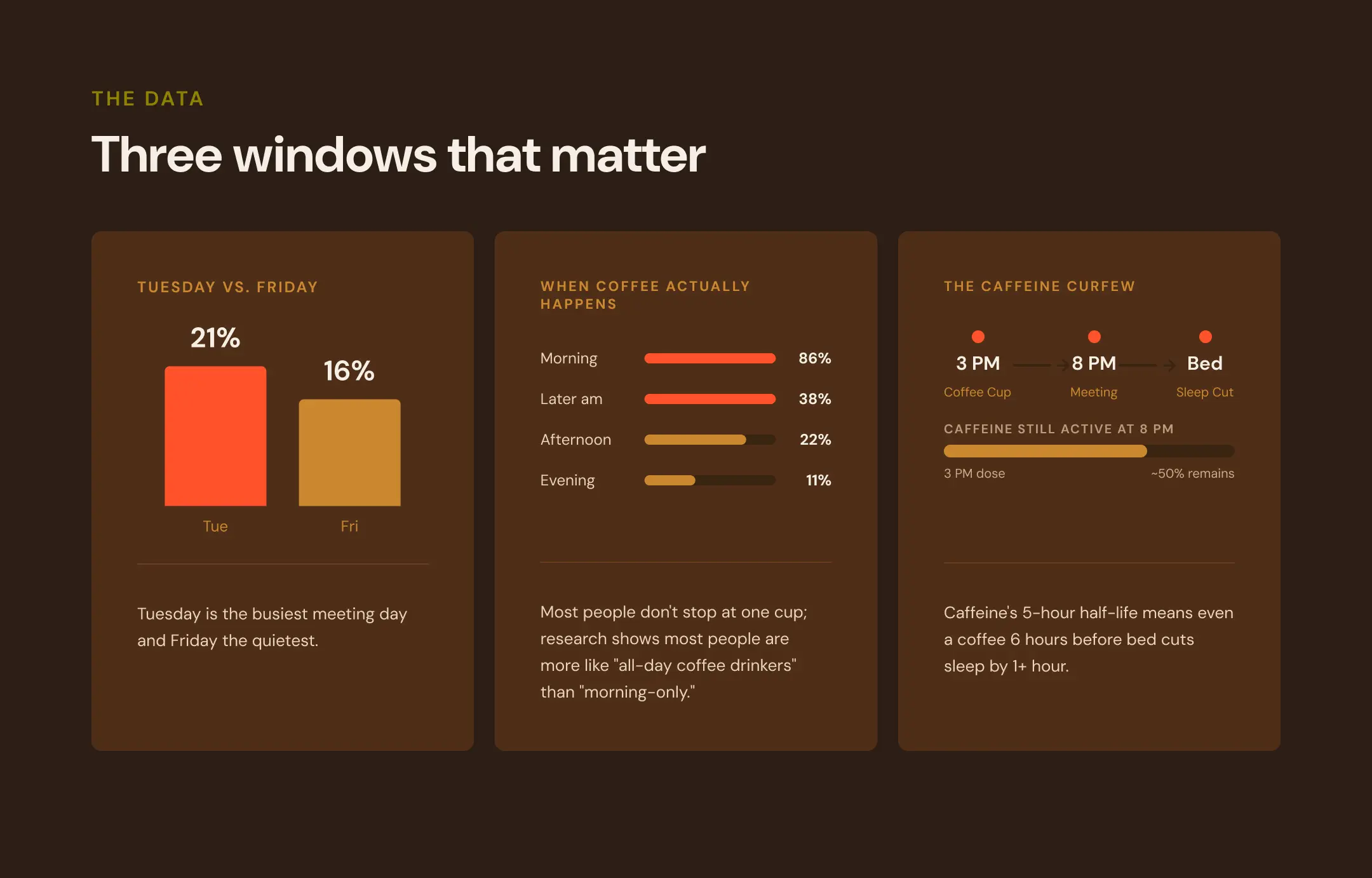
There's a quieter cost, too. A controlled sleep study found that caffeine taken even six hours before bedtime still cut total sleep time by more than an hour. The people in the study mostly didn't even notice it happening. They just slept worse.
That matters because meetings keep creeping later. Microsoft's research found meetings after 8 pm are up 16% year over year. Every "I'll just grab a coffee to get through this evening call" moment is quietly borrowing against that night's sleep, and that sets tomorrow's cortisol spike up to repeat the whole cycle.
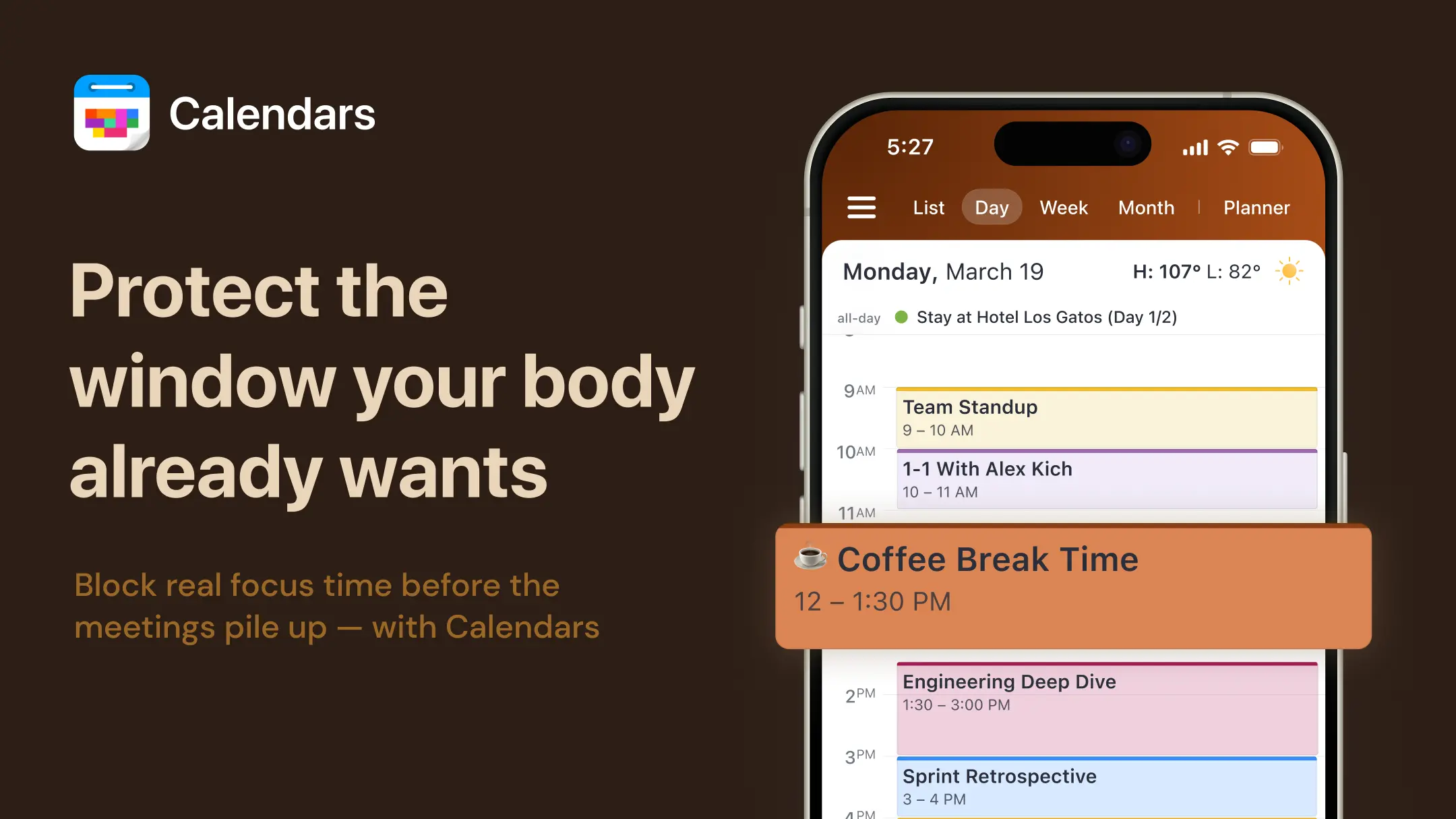
Protecting the window your body already wants
None of this is really an argument for drinking less coffee, or more of it. It's an argument for protecting the window your body is already asking for, instead of letting whatever's on your calendar decide it for you.
If your first coffee and your first meeting are set to collide every morning by default, the fix isn't more caffeine. It's a calendar that makes room for the ritual on purpose.
A few minutes of protected time before the day's calls start is a small thing to ask for. It's also, apparently, the difference between a coffee habit your body actually benefits from and one it's just tolerating.
Block your morning focus window in Calendars