Most habit advice starts with the assumption that you need to try harder. Wake up earlier. Be more disciplined. Find more motivation somewhere between your third meeting and your second cup of coffee.
If you’ve ever tried to start a new habit and quietly watched it fall apart a few weeks later, there’s nothing wrong with you. Most habit advice assumes your days are calm, your energy is steady, and you’ll always remember to do the thing you promised yourself to do. Real life is messier than that. Some days you’re focused and on top of everything. Other days you’re just trying to get through what’s in front of you.
Habit stacking works because it respects that reality. Instead of asking you to change who you are or magically find more motivation, it builds on what’s already happening in your day. You take something you do without thinking and gently add one small action to it. Over time, that new habit starts to feel less like a decision and more like a natural step. This creates habits that can survive real and imperfect days.
What is Habit Stacking?
Habit stacking is the practice of linking a new habit to an existing one so they happen in sequence. The existing habit becomes the trigger, and the new habit becomes the natural next step.
This idea gained widespread attention through Atomic Habits by James Clear, but its appeal goes beyond any single book. At its core, habit stacking is about reducing friction. You’re not asking yourself to remember something new, you’re simply extending a routine that already exists.
Does Habit Stacking Really Work?
Although “habit stacking” was coined by James Clear, the idea is rooted in how habits actually form in your brain, and scientists have been studying that for decades.
According to The Handbook of Behavior Change (Cambridge University Press, 2020), when a behavior is repeated in a stable context, the brain begins to link the cue and the action so tightly that the cue alone can trigger the behavior with little conscious thought. This process, sometimes called cue-response automaticity, is exactly why habit stacking is more effective than trying to remember a completely new action on its own.
How to Implement Habit Stacking
Imagine you want to take better care of yourself, but doing a full self-care routine already feels like an overwhelming task on a full to-do list. You don’t need a new morning routine or a perfectly curated self-care plan. You just need a place to start.
Habit stacking works best when you begin with something that already happens every day, whether you think of it as a habit or not. For many people, that anchor could be making coffee in the morning. It’s consistent, automatic, and already part of your day.
Instead of trying to add a standalone wellness routine, you extend that moment slightly. After your coffee is brewing, you take two minutes to stretch. Once the stretch is done, you take a few minutes to meditate before you start your day.
Nothing about this stack is dramatic. That’s the point. The wellness habits aren’t competing with your schedule; they’re naturally showing up inside it.
To make this easier to repeat, you can schedule your habit stacking routine in your calendar app.
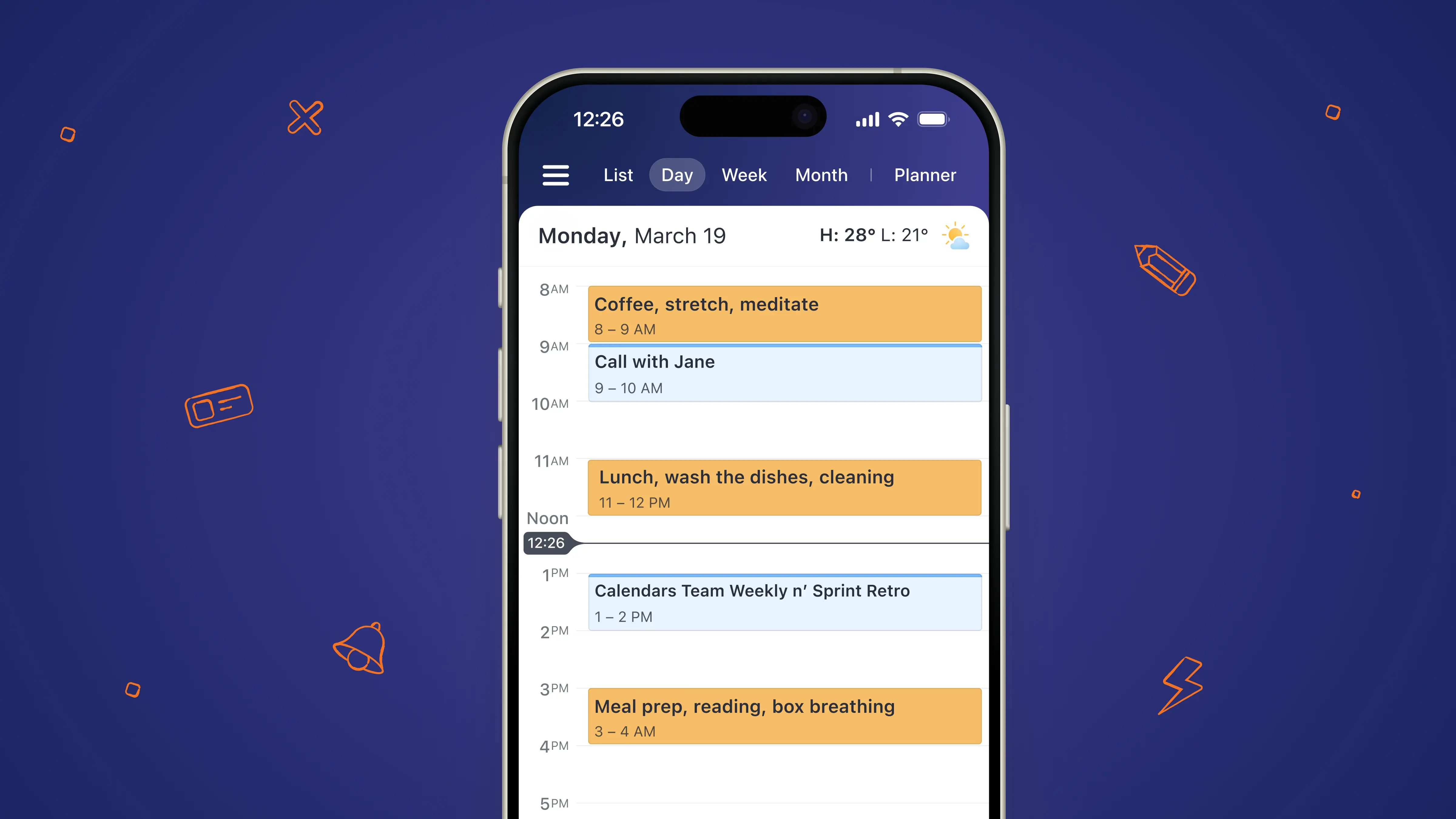
For example in Calendars by Readdle, you can add the entire sequence as a single recurring block. Label it as “Coffee, Stretch, Meditate” at the same time each weekday. Seeing it alongside meetings and commitments reinforces that this isn’t extra. It’s part of how your day starts.
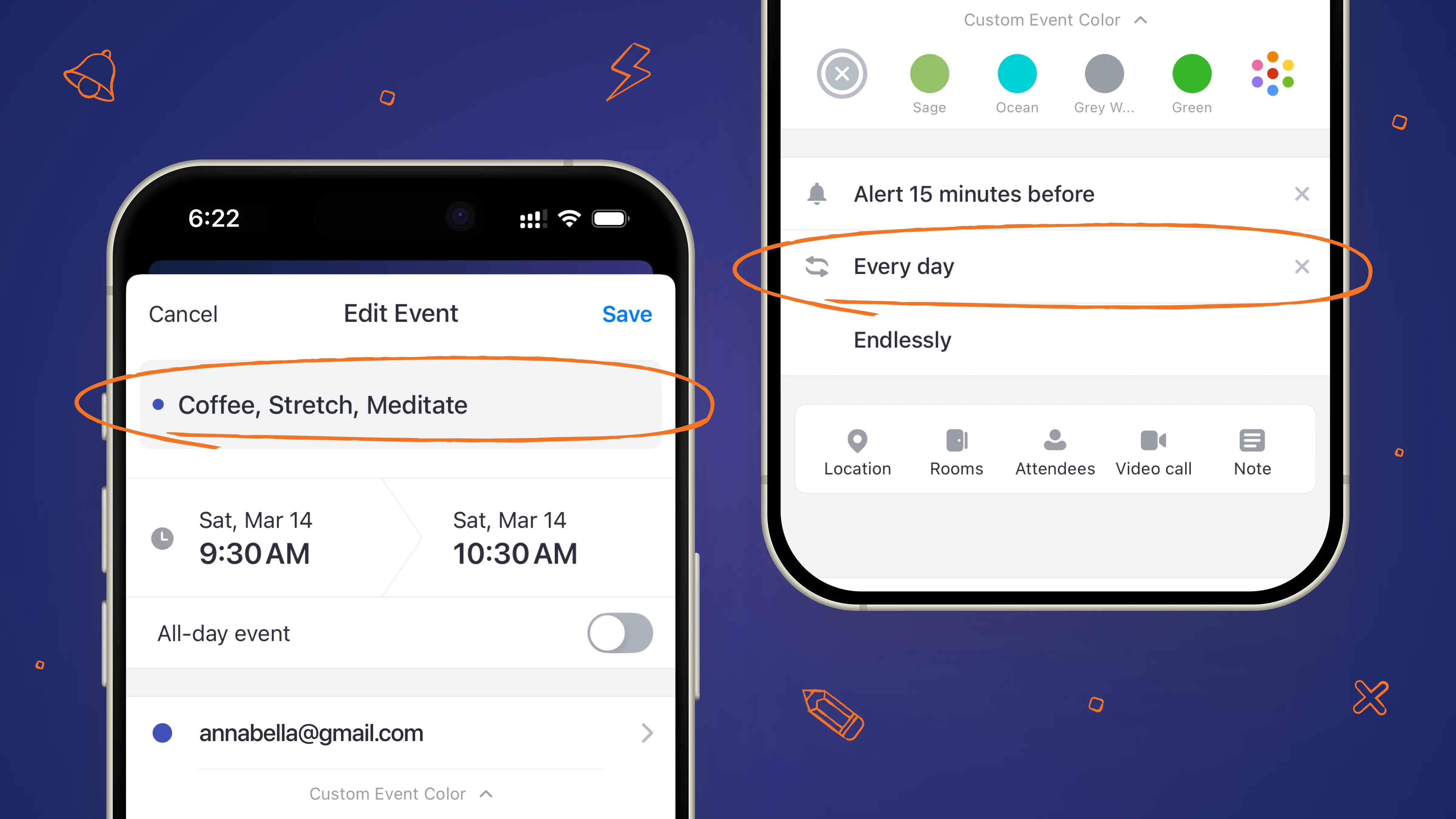
Over time, the stack becomes familiar. The stretch happens without negotiation. The meditation feels expected instead of optional. And if one morning is rushed, you can shorten it without abandoning it altogether. Consistency matters more than doing it perfectly.
That’s the real value of habit stacking for wellness: it makes caring for yourself feel sustainable.
Examples of Habit Stacking
Need more ideas to get your habit stacking started? Here are a few simple examples to spark your own creativity.
The basic formula is: After/Before [EXISTING HABIT], I will [NEW HABIT].
For example:
- After I kick off my work shoes, I’ll slip straight into my workout clothes.
- After I turn off my alarm, I’ll drink a glass of water to wake up fully.
- After I finish lunch, I’ll wash the dishes.
- After I put my kids to bed, I’ll spend five minutes tidying the living room.
- After I return home from work, I’ll put my shoes away and hang up my coat.
- After I make dinner, I’ll prepare ingredients for tomorrow’s lunch.
Use Calendars to Keep Habit Stacking on Track
To make habit stacking easier to stick with over time, it helps to build in a little support, especially when a routine is still forming. Inside Calendars, habit stacking can be supported in a few different ways, depending on what helps you stay consistent.
Here are three ways you can support habit stacking in the app.
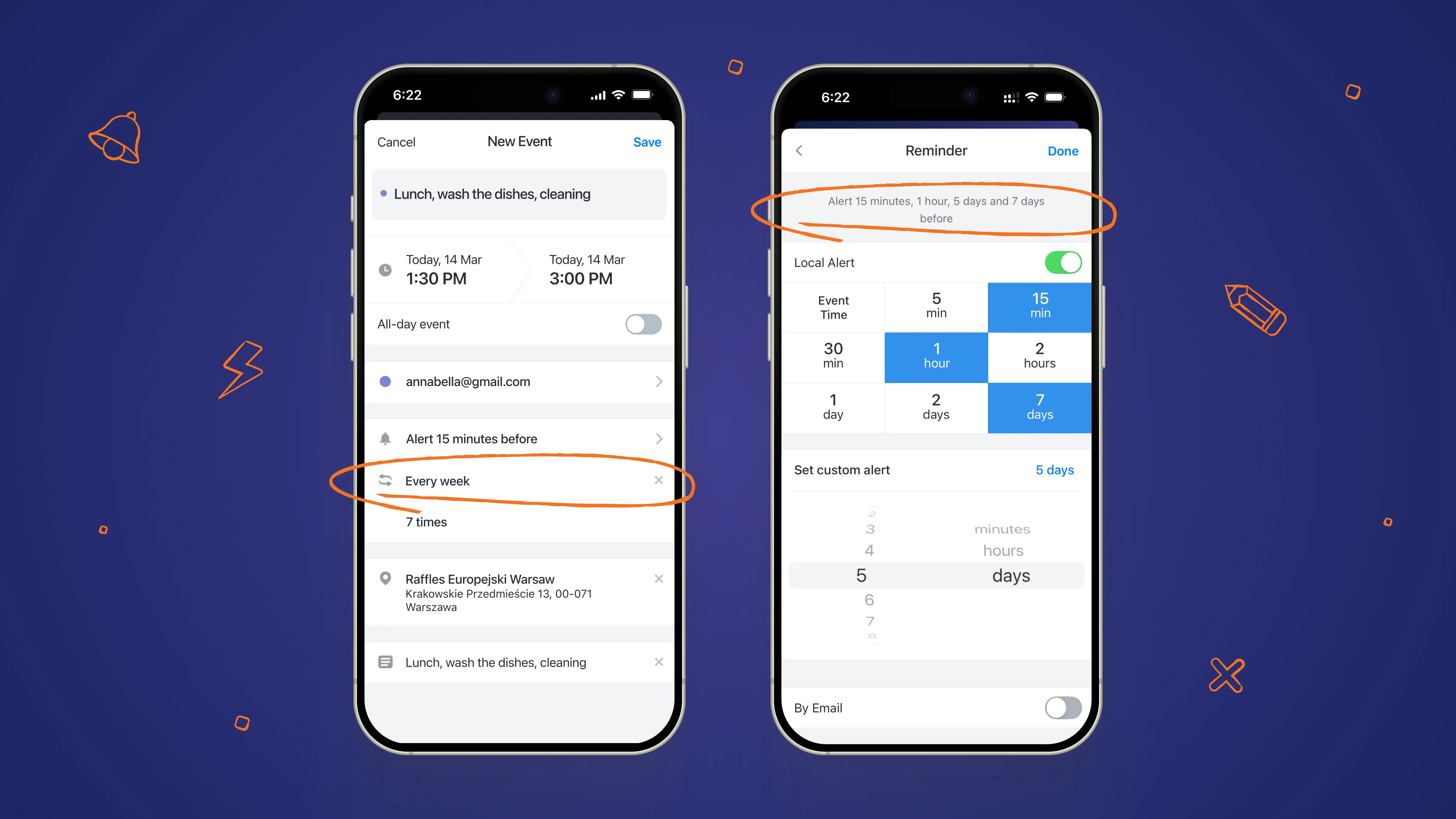
1. Use Reminders to Keep the Anchor strong
For some people, reminders are the key. You can set one shortly before your habit stack begins to give yourself a heads-up, and another at the start time to act as the actual trigger. Over time, you may not need them at all, but in the early stages they can make the difference between intending to do a habit and actually doing it.
2. Track Habits for the Satisfaction of Checking Them Off
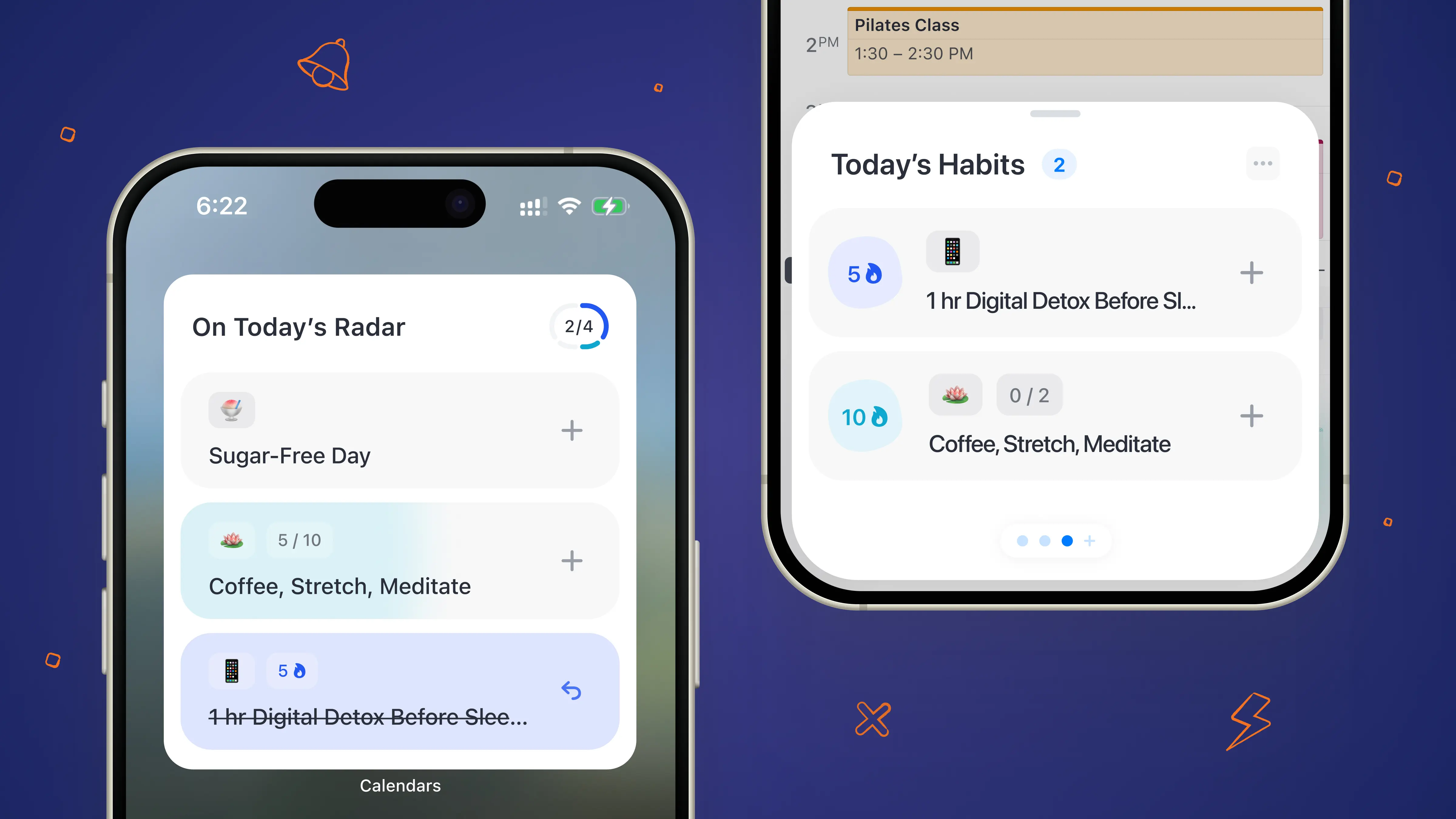
If checking things off motivates you, the built-in Habit Tracker is a perfect companion. You can create a habit, select the days it applies, add a color or emoji, and log progress with a tap. Watching streaks build and trends appear in the Insights section can be surprisingly motivating, and widgets make it easy to check in quickly without opening the full app.

3. Keep Your Habits Visible Inside Your Agenda
For some, the key is simply seeing the habit every day. By scheduling your habit stack as a recurring event alongside meetings, tasks, and deadlines, it becomes part of your daily rhythm. When habits live in the same space where you manage your day, they’re far less likely to be forgotten or deprioritized and consistency becomes easier without extra effort.
Habit stacking isn’t about being perfect. It’s about making small tweaks to routines you already do. Tie a new habit to something familiar, and suddenly it’s easier to keep going.
With Calendars, you can schedule your stacks, set reminders, track progress, and see them right alongside your meetings and to-dos.
Download Calendars by Readdle today and start building habits that actually stick—no extra coffee or motivational pep talks required.