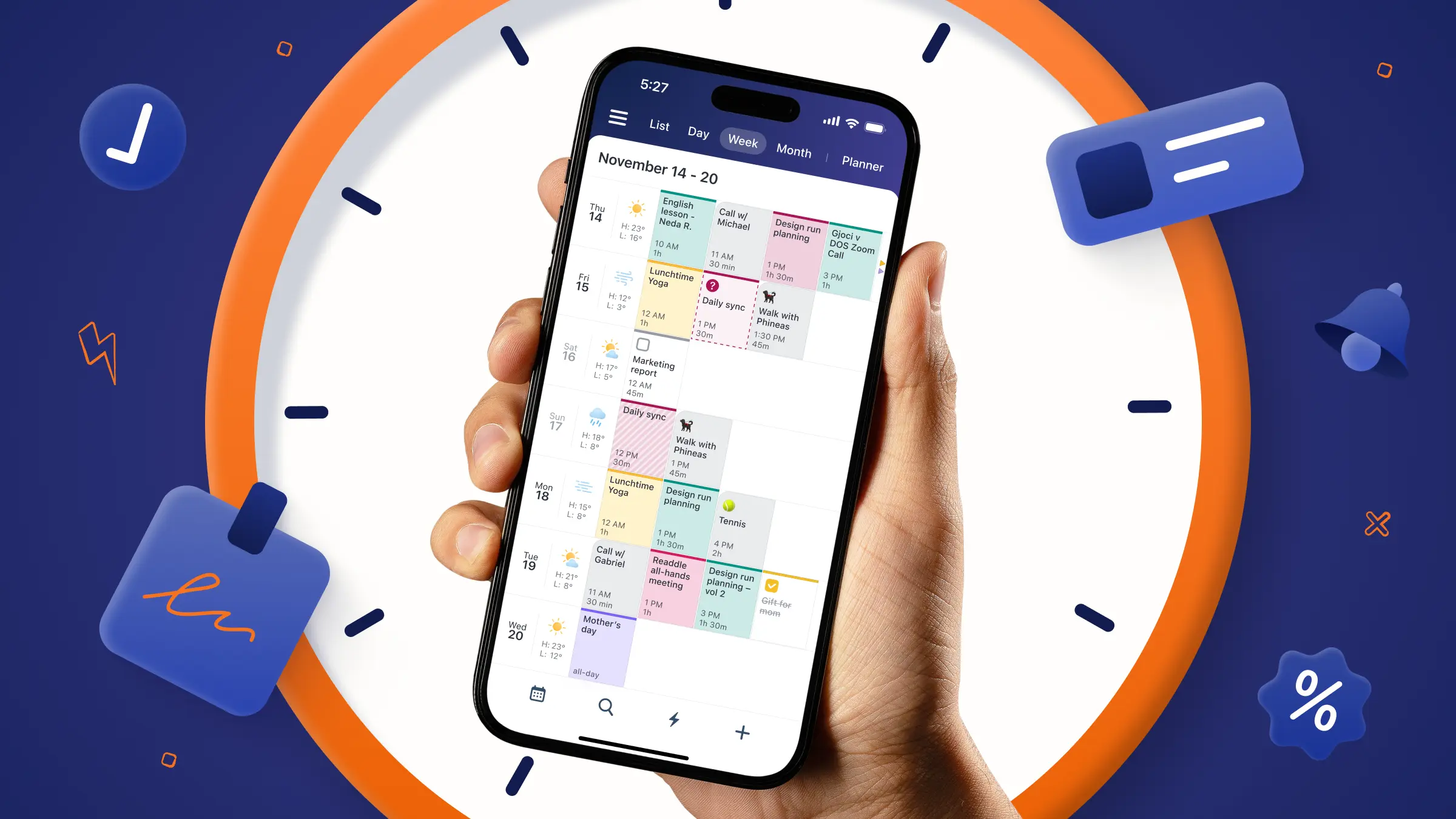
How you spend the first part of your day often shapes everything that comes after it. Some people swear by 5 a.m. wake-up calls, ice baths, and hour-long meditation sessions. But the truth is, a productive morning ritual doesn't have to look like anyone else's. Whether you have 15 minutes or an hour, a thoughtful morning ritual can help you focus on what matters most.
What is a morning ritual?
A morning ritual is a series of intentional habits you repeat each morning to help you start the day with focus and purpose. While the terms morning ritual and morning routine are often used interchangeably, there's a subtle difference.
A morning routine focuses on what you do, like making coffee, getting dressed, or checking your email. A morning ritual focuses on why you do those things. It's a set of habits that helps you feel ready to tackle the day ahead.
For example, going for a run because it's on your schedule is part of a routine. Using that time to clear your mind and prepare for the day turns it into a ritual.
What are the 4 types of rituals?
The word ritual might make you think of ancient ceremonies, religious traditions, or cultural celebrations. Historically, rituals were actions performed to mark important moments, connect with a community, or express shared beliefs.
In the present time, the word has taken on a broader meaning. A ritual can be any intentional practice that helps you transition into a certain mindset or moment. Unlike routines, which are often about efficiency, rituals are about purpose. They're the small actions that help you slow down and stay present.
While experts classify rituals in different ways, most personal rituals fall into four categories:
1. Physical rituals
These rituals help you wake up your body. Think stretching, going for a walk, exercising, or simply drinking a glass of lemon water before reaching for your phone. They signal that it's time to shift from rest to action.
2. Mental rituals
Mental rituals prepare your mind for the day ahead. That could mean journaling, reading a few pages of a book, reviewing your calendar, or deciding on your three most important tasks before opening your inbox.
3. Emotional rituals
These practices help you check in with yourself and set a positive tone. You might write down a few things you're grateful for, listen to your favorite song, or spend a minute appreciating a quiet cup of tea before the day gets hectic.
4. Spiritual rituals
Spiritual rituals don't have to be religious, although they certainly can be. For many people, they're simply moments that create a sense of connection, whether that's meditating, praying, or spending time in nature.
Use a calendar to support your morning ritual
Creating a morning ritual is about more than choosing a few healthy habits you want to practice. The real value comes from doing those habits consistently. That's where many morning rituals fall apart. You might start the week feeling motivated, but without a clear structure, those habits can quickly get pushed aside.
A digital calendar can help turn your morning ritual from a good intention into a repeatable system. When you visually map out your morning, you can see exactly how you're spending your time and protect space for the habits that matter.
With Calendars by Readdle, you can create repeating events for each part of your routine, customize the length of each activity, and build a morning schedule that works for you.
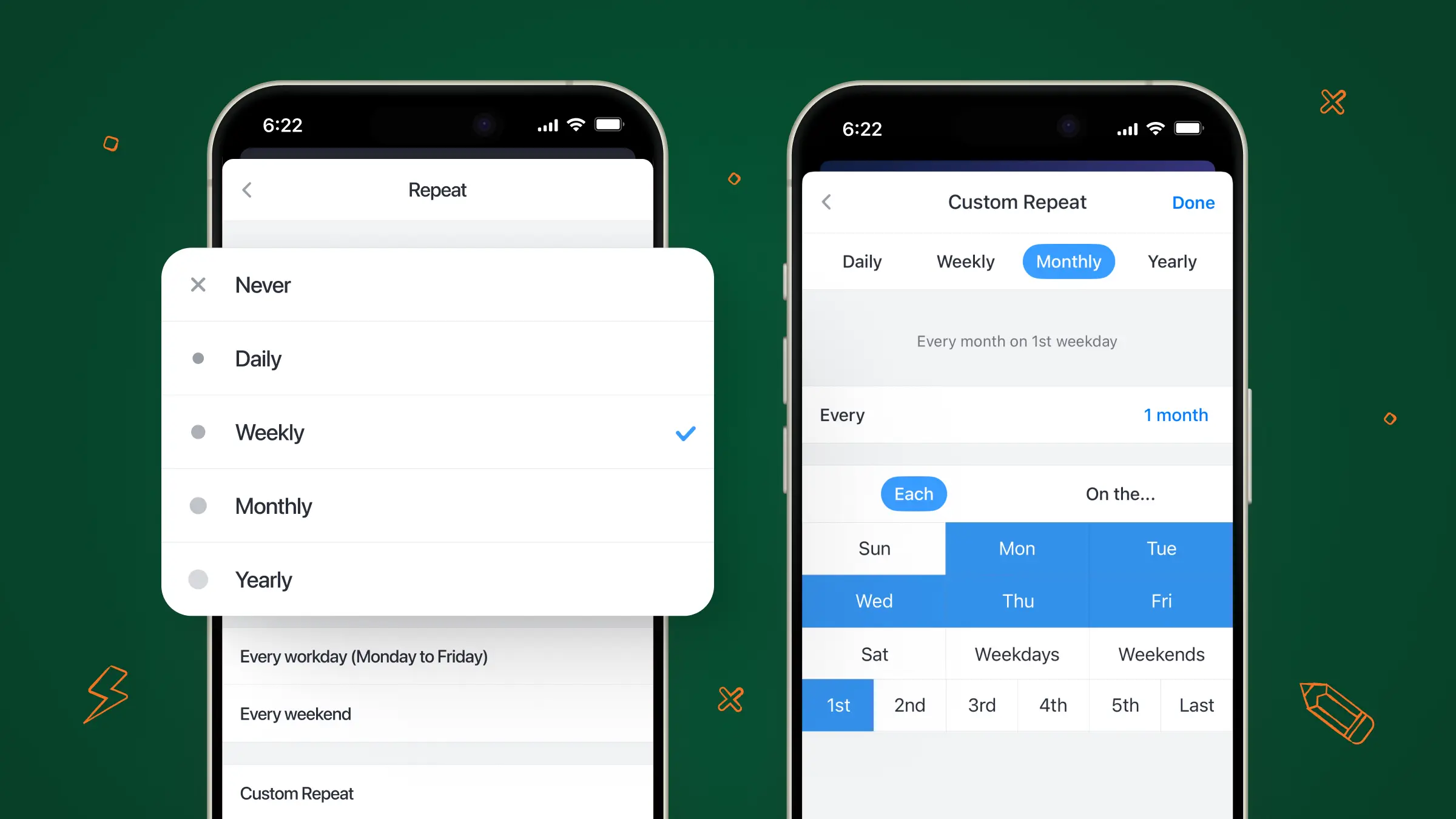
For example, you might add:
- Movement for exercise or stretching.
- Mindfulness for meditation or breathwork.
- Reflection for journaling or gratitude.
- Planning to review your calendar and top priorities.
- Focus to kick off your first deep work session.
Pro tip: Color-code each block to quickly see what your morning looks like. A quick glance at your calendar will show whether your morning has a healthy balance.
Create your own morning ritual template
A productive morning ritual doesn't need to take hours. Start with a few intentional blocks that support your goals and adjust as needed.
Morning Ritual Example
Here’s an example of how to build your morning ritual in five recurring calendar blocks.
🔵 Meditation (10 min)
Clear your mind before the day's distractions begin.
🔴 Movement (20 min)
Go for a walk, stretch, or squeeze in a quick workout.
🟠 Journaling (10 min)
Reflect, practice gratitude, or jot down your top priorities.
🟣 Calendar review (5 min)
Check your schedule and identify your most important task.
🟢 Focus time (30 min)
Protect the first part of your workday for deep, uninterrupted work.
You can recreate this template in Calendars by Readdle as recurring events, then customize it based on your schedule. Swap activities, adjust the timing, or create different versions for weekdays and weekends.
Pro tip: Experiment with your morning ritual for a few weeks, then use the Personal Reflections feature to see how each event affects your mood, energy, and stress. Over time, you'll discover which habits leave you feeling good and which ones are worth rethinking.
Frequently Asked Questions
What is the 7 second morning ritual?
The "7 second morning ritual" is a viral concept that typically refers to taking a brief moment after waking up to set an intention, practice gratitude, or use a positive affirmation. While it can be a helpful mindset exercise, there's no single proven ritual. What matters most is building habits that support your goals over time.
How long should a morning ritual be?
A morning ritual can be as short as a few minutes or as long as an hour. Start with the habits that have the biggest impact on your day and build from there. A simple ritual you follow consistently is more valuable than a complicated one you abandon after a week.
Can I have different morning routines on weekdays and weekends?
Yes. Your weekday mornings may need to prioritize productivity and preparation, while weekends can leave more room for slower, personal activities. Create different schedules that match your routine instead of forcing the same structure every day.