What to do if you're launching a product in a category with dozens of competitors and it seems like there's simply nothing new to offer users? How do you find new opportunities and build a product people will choose over the rest? Experts from the team behind Documents — the file manager by Readdle downloaded by more than 116 million people worldwide — share their insights and real-world experience.
How we stood out in a crowded category
Documents by Readdle falls under the Productivity and Business category — apps that help people automate processes and use their time more effectively.
There are already dozens of tools in this category for various tasks. Most of them follow the same logic: one problem — one solution.
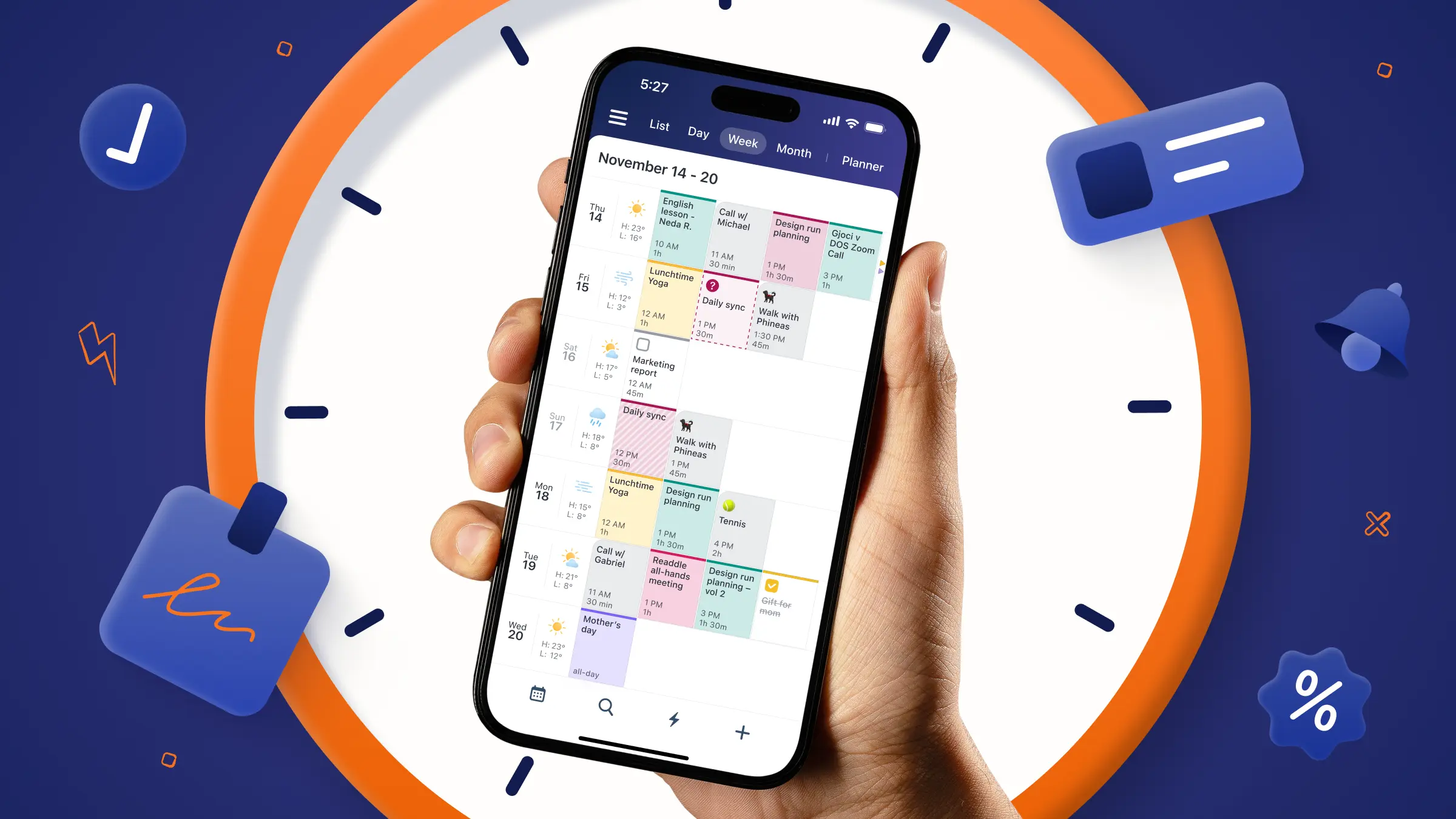
- Need to manage your time — there's a calendar.
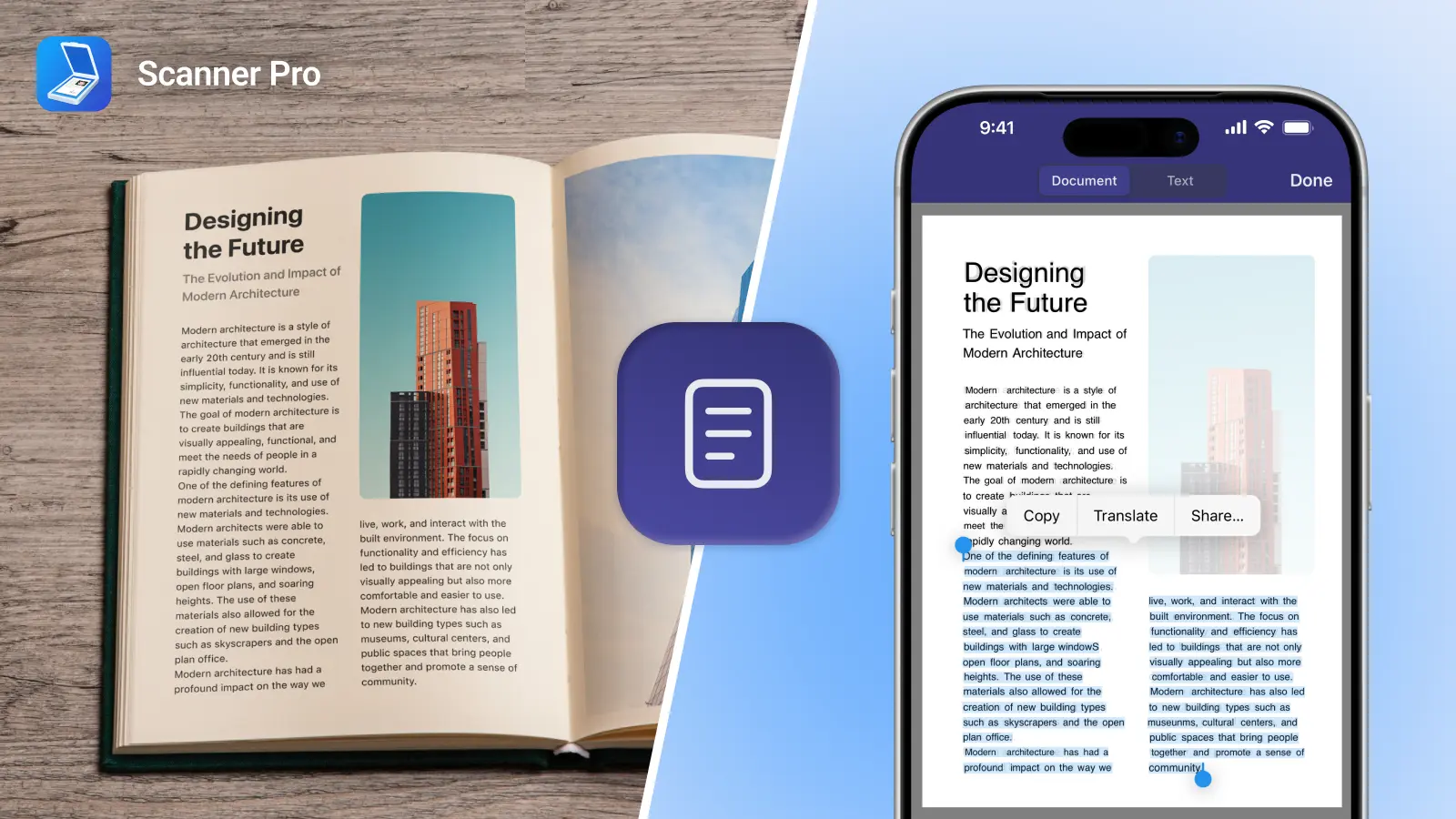
- Need to work with PDFs — there's a dedicated PDF app.
- Need to find or download something — there's a browser.
Each product addresses a specific scenario. But for the user, this means that any more complex task requires switching between different tools. That's where we saw the opportunity.
"The real challenge isn't building yet another feature — it's overcoming fragmented user journeys."
— Artem Azarov, Product Lead
We started thinking about the product as a way to unify different workflows within a single interface, so users wouldn't have to switch between apps, but could complete tasks from start to finish in one place.
That's how Documents was born — a file manager for iPhone and iPad that lets you work with any files (documents, images, videos, music): view, edit, play, download, sign, sync, and more.
"We packed everything into one product that solves many use cases for different audiences — and made it much more convenient."
— Pasha Sakhatskyi, Head of Product Marketing
With this approach, competition changes too. The product overlaps with many tools — from PDF editors to browsers and cloud services — but has very few direct competitors.
How we understand what users need
Where ideas come from
⮕ User research. We conduct interviews and various surveys, but we don't limit ourselves to how people use Documents. We try to understand the bigger picture: what they were doing before they found our product, what other tools they use, and what they feel is missing. This yields interesting insights into how to improve the user experience.
For example, research with students revealed that many use flashcard apps (for language learning, memorization, etc.). That insight opens opportunities to bring similar functionality into Documents, so users don't have to switch to other services.
⮕ Market analysis. We track how the market is evolving, what new products appear, what people are using, and what problems and needs they discuss on platforms like Reddit.
⮕ Common sense. When you have experience, a strong understanding of the market, technology, and user behavior, you start seeing opportunities others don't.
"I like the term 'product intuition'. It's the quintessence of all our experience, which can crystallize into some interesting, innovative solution."
— Artem Azarov, Product Lead
How we work with user requests
Users usually think practically and express very specific requests. Our job is to understand the deeper need behind them.
For example, we're researching how students work with documents, and we get a request to add more highlight colors. But that's just a symptom of the problem. So we start asking: Why do you highlight text? Why do you need more colors? The answer: it helps with memorization. When you highlight definitions in yellow and key ideas in purple, it's easier to stay focused. Then we go further and ask: Why do you need to remember things better? The answer: to prepare for lectures and get good grades.
"At that point, our job isn't to add more colors so the person can color-code their whole document — it's to help them prepare for that lecture."
— Pasha Sakhatskyi, Head of Product Marketing
Which leads to a completely different solution — for instance, an intelligent tool that highlights key points and generates summaries. That's exactly how product solutions emerge from research.
How we build and validate ideas
Our product process has three stages:
-
Discovery Flow. We conduct research, gather data, analyze how something could be implemented, and prepare the design. The product team and designers are most involved at this stage, with marketing brought in as needed.
-
Delivery Flow. Next comes the development stage: engineers and QA carry most of the workload here, but the product team, designers, and marketers stay involved, because clarifications can come up along the way.
-
Impact Flow. After development, the product or feature needs to be taken to market and its value communicated to users. Here, primary responsibility shifts to the marketing and product teams. At this stage, we launch campaigns and product activations, collect and analyze data, and check whether we've hit our planned results.
There are several key criteria any hypothesis, task, or initiative must meet in order to move into development and reach release:
- User value: What value does this deliver to users?
- Business value: How does it translate into business results?
- Strategic fit: How well does this align with our vision and strategy?
"Sometimes users want something that could even drive a business result — but if the initiative doesn't move us toward our vision, we'll likely deprioritize it."
— Artem Azarov, Product Lead
In some cases, we use classic frameworks — when initiatives are appropriate to compare, for example, for smaller optimizations. But overall, it's always a combination of approaches. If resources allow, we can test several hypotheses simultaneously.
How we measure success
⮕ Quantitative metrics. For example, conversion rate: the ratio of users who completed the target action (started a trial, made a purchase, activated a feature, etc.) to the total number of users. If we have two implementation options, we compare their conversion rates and consider the higher one more successful.
⮕ Qualitative assessment. We look at support tickets, overall volume of requests, reactions on social media, and positive/negative feedback. This helps us understand how the audience actually perceived the change.
"We have assumptions about how users behave, but reality can differ. That's why it's important to have those assumptions — while keeping in mind that every initiative is an experiment that may or may not work."
— Pasha Sakhatskyi, Head of Product Marketing
That's why every idea in the product isn't an obvious solution, but a hypothesis that needs to be tested.
How product and marketing work together
Some teams have a strict functional split: the product team handles things up to a certain point, the marketing team takes over after, and neither side concerns itself with the other's work. That's not how we operate: we nominally divide roles into product and marketing, but in practice all teams can pick up each other's tasks.
Marketing can bring market insights to the product team and propose ideas, while the product team can give marketing a deeper understanding of users — who they are, how they behave. This helps craft sharper positioning and messaging.
Prioritization decisions are made jointly by the product manager and marketer. Together, they determine what genuinely has the greatest impact on the business and the most benefit for users, and prioritize accordingly.
There's no imbalance between product and marketing initiatives: we always allocate budget to both. Product initiatives are often hard to compare directly with marketing in terms of impact. Marketing experiments can be measured through metrics like conversion lift and projected financial return. Product initiatives, on the other hand, have a longer-term effect on user retention and re-engagement.
"There has to be a balance: experiments are essential to keep traffic moving and ensure the optimization engine is constantly running. At the same time, without improving the product, we won't last long. Everyone understands that you need both to win in the long run."
— Artem Azarov, Product Lead
Of course, teams often see things differently. That's why we have a shared set of principles, frameworks, and models that help us navigate decisions across different situations.
For example, everyone can have their own opinion on design — and it should be shared. But we respect the designer's expertise in shaping the product's visual experience, so the final decision ultimately stays with them.
"Each person is accountable for the outcome within their role. We believe we hire people who are capable of owning that responsibility — and we trust them to do it. That's the culture we're building."
— Pasha Sakhatskyi, Head of Product Marketing
The biggest challenges we face today
Lately, the main challenge has been that our super app — the one that does everything — is becoming too complex. Any app that solves a single problem will always be simpler and easier to understand than one that combines everything in one place. Last year, we surveyed users who deleted the app and found that around 20% did so because they couldn't figure out how to use it.
"We want to deliver more value so users can cover more use cases, while still keeping the interface simple and intuitive. That's a real challenge."
— Artem Azarov, Product Lead
Over the years, the amount of functionality grows, but some of it becomes dead weight. That's why we've started simplifying the app and removing features that aren't used. For example, we recently noticed that fewer users were using the file transfer feature between devices with Documents installed, so we decided to phase it out. These are the kinds of challenges you face when building a large, complex product.
We see similar challenges in positioning and marketing. With so many features, the product becomes harder to communicate clearly. Since it serves multiple use cases and audiences, it's more effective to showcase complete user scenarios rather than listing features one by one.
"One of the hardest things is explaining a broad, horizontal product in a single sentence — so people immediately understand the value."
— Pasha Sakhatskyi, Head of Product Marketing
Our core principles for building the product
⮕ Test ideas as fast as possible. Before building anything, we aim to validate ideas quickly and cost-effectively. Developing new features can easily take months. The sooner we confirm there's real demand, the better.
⮕ Conduct high-quality research. For broad products with many use cases, user interviews, observation, and behavioral analysis aren't optional — they're essential. Without them, the business simply wouldn't function. Even after years of working on Documents, we continue to uncover new insights about our users.
"In 'all-in-one' products, it's especially important to focus on user problems and tasks — not features."
— Artem Azarov, Product Lead
⮕ Own the outcome. In a project as large as Documents, there's no way to operate without full ownership. Everyone is responsible for seeing their work through to completion. If a designer needs something from marketing and it's not immediately available, they solve the problem themselves. Work can't stall because something is missing. On a project of this scale, everyone needs to be mature, independent, and accountable to keep things moving forward.
⮕ Trust the data. Nearly all of our decisions are driven by metrics — this principle runs through everything we do.
"When there's so much around you, it's easy to fall into cargo cult thinking — copying others' solutions just because they seem to work. We always try to ask: Why is this actually good? When you dig deeper, you might realize you don't need it at all."
— Pasha Sakhatskyi, Head of Product Marketing
⮕ Operate as one team. The product team understands marketing's needs, and marketing understands product needs. In this kind of synergy, we solve user problems more effectively — and make sure people clearly see the value, actively use the product, and share feedback.
In the end, in categories where everything already exists, the winner isn't the one with the most features — it's the one that understands the user best and delivers a seamless, end-to-end experience.
Want to work on a product that makes a difference for millions of users worldwide? We are looking for a Senior Product Manager to join the team!