A busy calendar doesn't always mean a productive day. If you're constantly moving between unfinished tasks, your attention may never have enough time to settle into one thing. This is known as context switching, and while you can't eliminate every transition, you can design your day to make unnecessary ones less frequent.
What is context switching?
Context switching is the process of shifting your attention from one task to another. The term has a technical meaning in computing, too. In an operating system, a context switch occurs when a computer’s processor pauses one process and switches to another, saving the state of the first process so it can return to it later. People with ADHD may also be particularly prone to context switching because differences in attention regulation and executive functioning can make it harder to resist distractions. In everyday work, the idea is similar, your attention moves away from one task and has to reorient itself to a different one.
Daily examples of context switching
Context switching isn't limited to the workplace or major interruptions. It can happen throughout an ordinary day, often in ways that barely register as distractions until you realize how frequently you've shifted your attention.
Some common examples include:
- Checking your phone while getting ready. You start getting dressed, check a text, open Instagram, read a notification, and then realize you've lost track of what you were doing.
- Cooking while bouncing between tasks. You start making dinner, pause to answer a message, remember you need to take something out of the freezer, check a recipe, and then return to the stove.
- Starting your morning routine and interrupting it. You make coffee, remember you need to pay a bill, open your banking app, see another notification, and suddenly you're doing something completely different.
- Moving between household chores. You start folding laundry, notice dishes in the sink, start cleaning the kitchen, remember you need to put something away, and end up with several unfinished tasks.
- Switching during downtime. You sit down to watch a show, check your phone during the first few minutes, respond to a text, scroll social media, and then return to the show without really having focused on any of them.
Context switching vs. multitasking
Context switching and multitasking are closely related, but they aren't quite the same thing. Both involve managing multiple demands on your attention, but the difference comes down to what your attention is doing.
Multitasking means attempting to handle two or more activities at the same time. You might listen to a podcast while answering texts, eat dinner while watching television, or try to follow a conversation while checking your phone.
Context switching, on the other hand, happens when you move your attention from one activity or mental context to another. You're not necessarily doing things simultaneously; you're repeatedly shifting between them. In practice, the two terms often go hand in hand. What feels like multitasking may actually be a rapid series of context switches.
The cost of context switching
Context switching can seem harmless because most individual interruptions only take a few seconds or minutes. But the real cost isn't just the time spent on the interruption itself. Every time you switch from one activity to another, you have to remember where you left off and get back into the mental state you were in before. When you switch again, you repeat the process. Over the course of a day, constantly stopping, restarting, and retracing your steps can make it harder to maintain focus and slow your progress. Instead of building momentum and moving an activity forward, you're repeatedly going back to where you were. The more often this happens, the more fragmented your attention, and your day, can become.
Ways to reduce context switching
You can't eliminate every context switch from your day, and you shouldn't try to. The goal is to give yourself enough uninterrupted time to make progress. A few simple habits can help reduce unnecessary switching and make it easier to stay focused on what you're doing.
1. Practice singletasking
Singletasking means giving your attention to one activity at a time rather than trying to divide it between multiple things. If you're reading, read. If you're cooking, cook. If you're answering messages, focus on those rather than simultaneously scrolling through another app.
Give each activity your full attention for a defined period before intentionally moving on to something else. You may find that you finish tasks faster and enjoy them more when you're not constantly pulling your attention elsewhere.
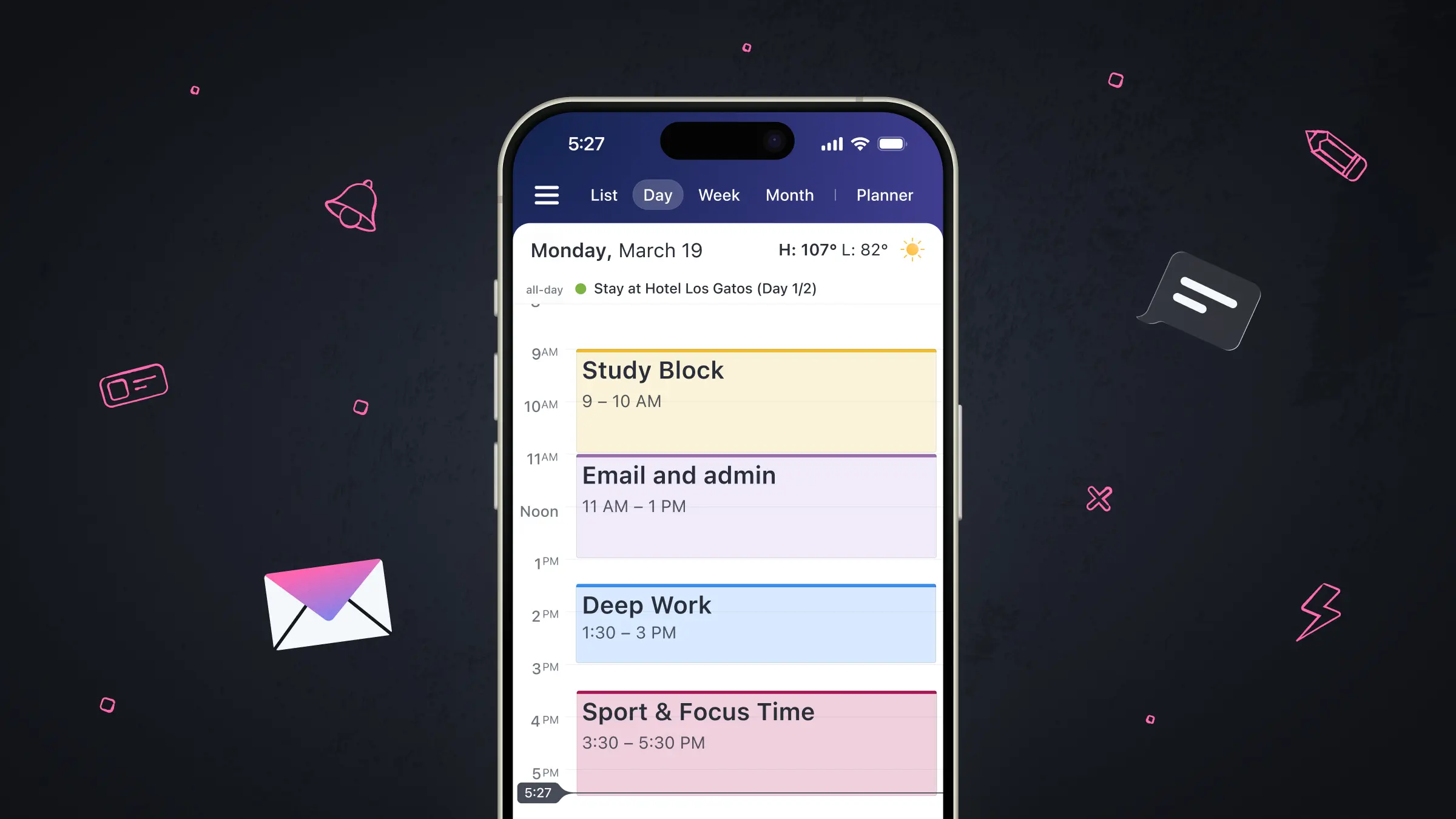
Calendar tip: Create dedicated blocks for activities you want to give your full attention to. For example, block 30 minutes for reading, an hour for exercise, or a specific period for responding to messages. Having that time reserved makes it easier to stay with one activity rather than continually deciding what to do next.
2. Try habit stacking
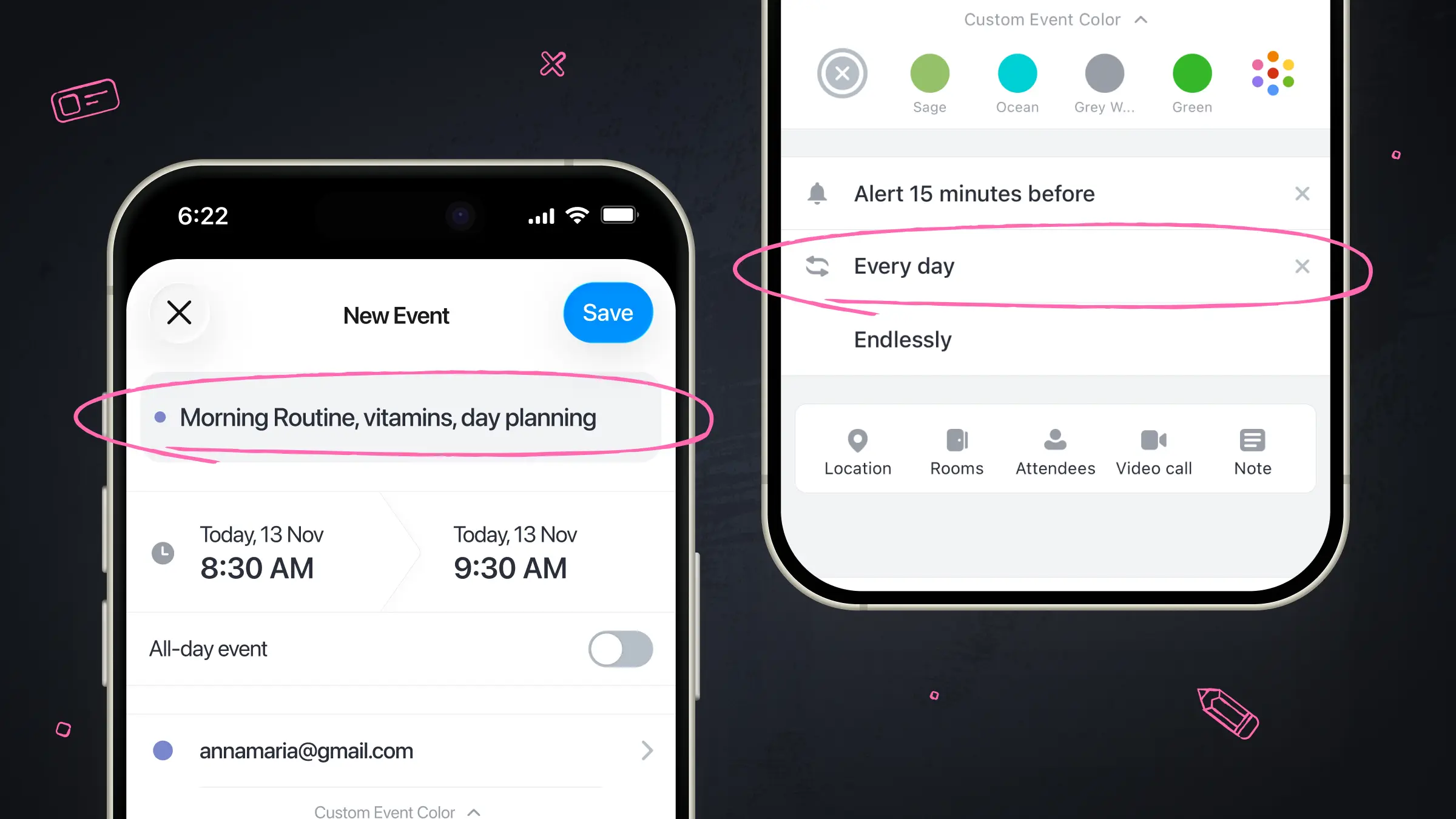
Habit stacking involves attaching a new habit to something you already do consistently. Instead of creating an entirely new routine, you use an existing habit as a cue for the next one. For example, you might brush your teeth after taking your vitamins or spend five minutes planning tomorrow after finishing dinner. Linking habits together can reduce the number of decisions you have to make about when and how to fit them into your day.
Calendar tip: Add recurring routines to your calendar at the time they naturally occur. If you always plan your next day after dinner, create a recurring evening block for it. Over time, the calendar reminder can become part of the routine itself.
3. Batch similar tasks together
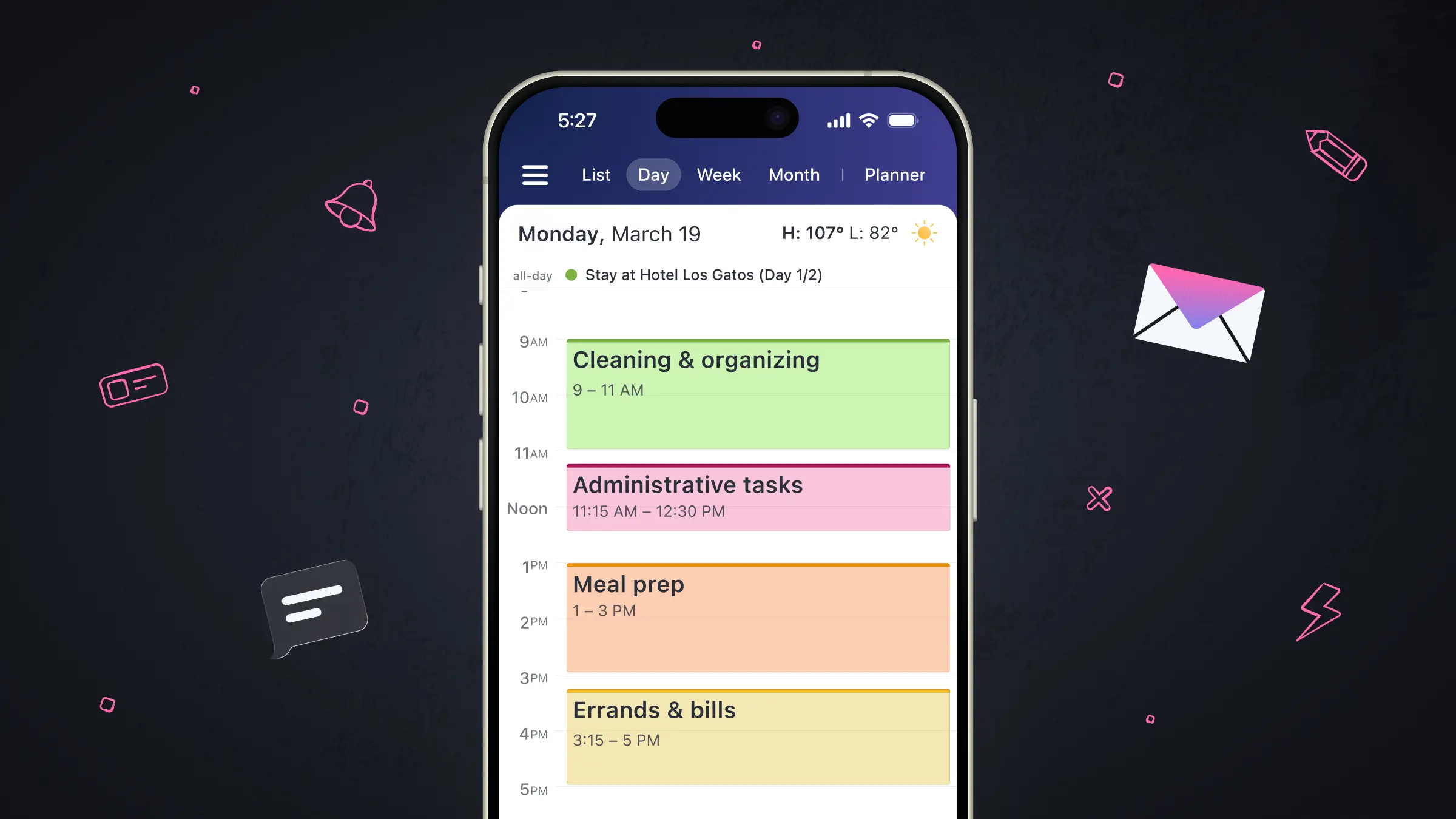
Task batching means grouping similar activities and completing them during the same period instead of scattering them throughout the day. You might respond to messages in one sitting, run several errands during the same outing, or handle household chores together. The benefit is that you're not repeatedly moving between completely different types of activities.
Calendar tip: Create recurring blocks for your batches. For example, reserve one period for errands, another for administrative tasks, or a set time for checking messages. If several errands are in the same area, you can also add them to one calendar block rather than treating each one as a separate event.
4. Use timeboxing
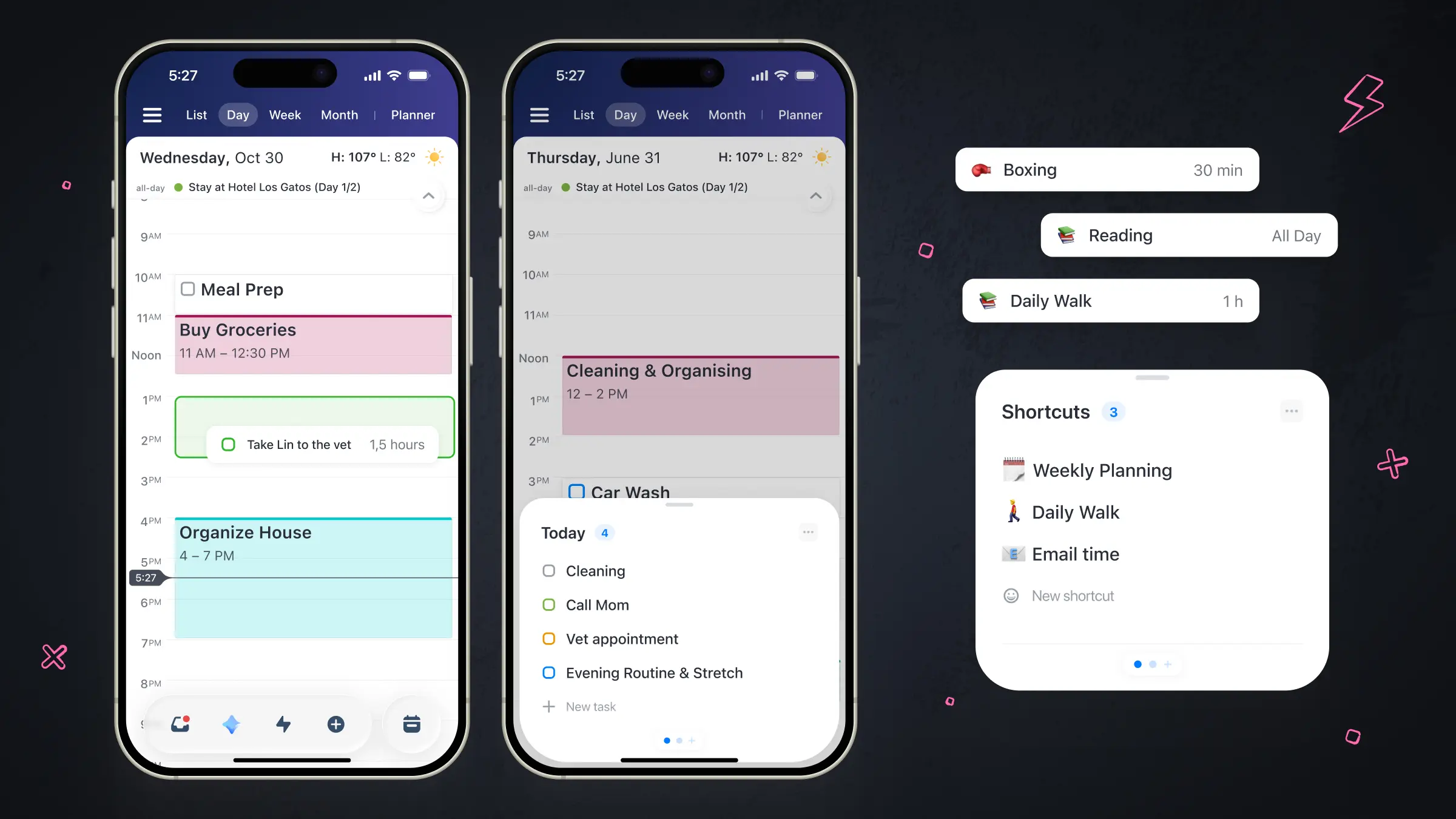
Timeboxing means giving an activity a defined amount of time and working on it within that window. Instead of telling yourself you'll “get around to” cleaning, reading, organizing your inbox, or working on a project, you might give yourself 20 or 45 minutes to focus on it. A defined endpoint can make it easier to commit to one activity without feeling like you have to finish everything at once. When the time is up, you can intentionally decide whether to continue, stop, or move to something else.
Calendar tip: Put the timebox directly on your calendar with a clear start and end time. For example, rather than having an open-ended “organize house” task, schedule 6:00–6:30 p.m. for it. Readdle’s Planner features let you tap-and-hold a task and drag it directly onto your day, so creating a timebox feels like placing a block, not filling out a form.
5. Use time blocking
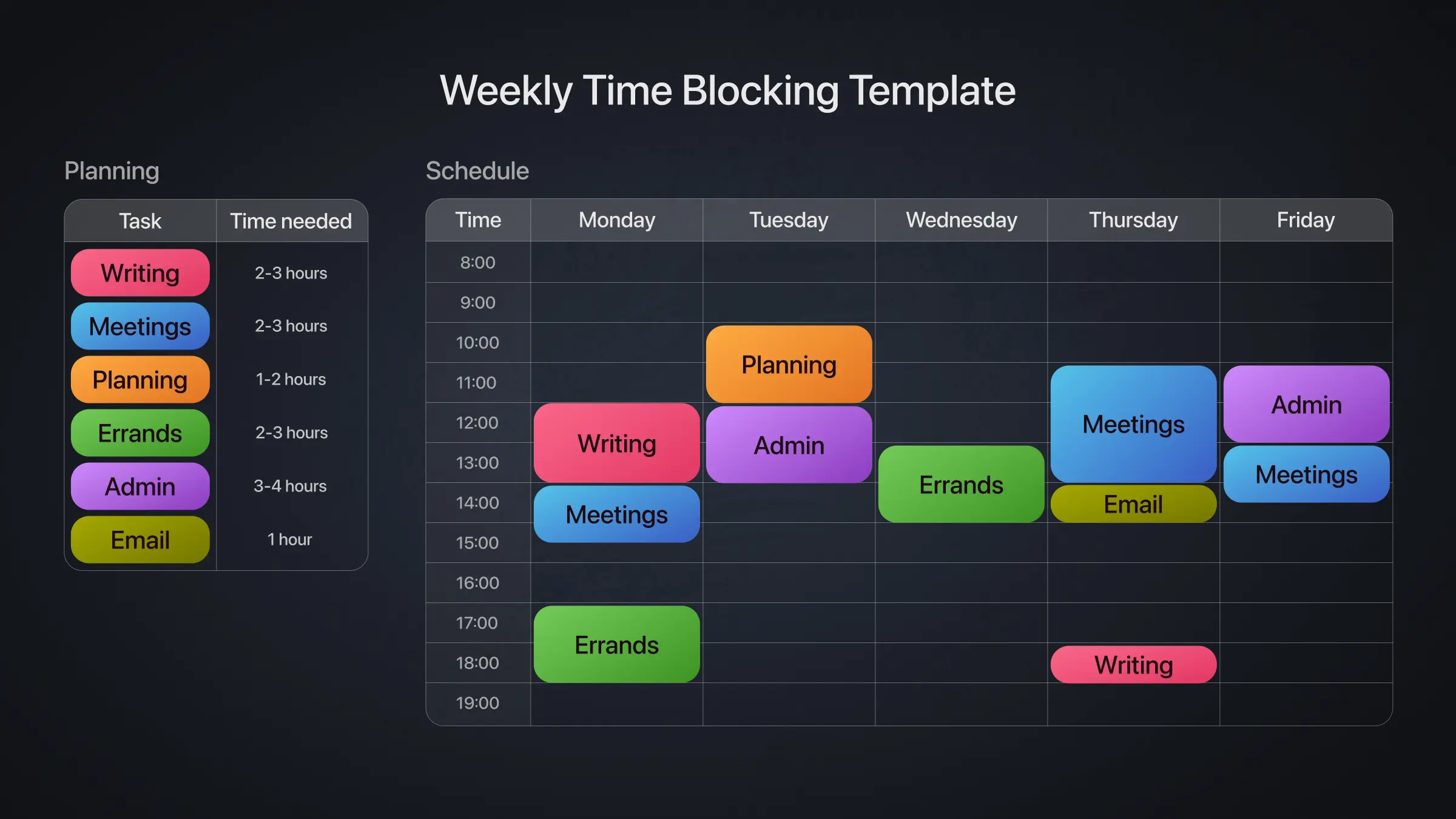
Time blocking takes the idea a step further by planning your day around blocks of time dedicated to specific types of activities. Instead of simply filling your calendar with appointments, you reserve portions of the day for things like focused work, exercise, errands, personal time, or household responsibilities.
Calendar tip: Start by identifying two or three activities that deserve protected time and block them on your calendar before filling the remaining space with other commitments. With a unified calendar view, you can see your appointments and planned blocks together and spot where your day is becoming too fragmented.
A fragmented schedule can make context switching harder to avoid. Download Calendars by Readdle and start building a more focused day.