40% of employees globally experienced stress daily, according to Gallup’s State of the Global Workplace report.
That number reflects something many people already feel but don’t always have language for. Work-related stress and burnout are becoming part of everyday work life. But burnout is still often understood too late. Most people don’t recognize it in real time. They learn about the symptoms after they’ve already been building for weeks, months, or even years.
This is where your calendar becomes a surprisingly powerful tool. Instead of trying to understand burnout only through how it feels, you can also look at how it shows up in how your time is structured.
Think of it like a weather report. You don’t wait for a storm to understand the forecast, you look at the patterns building over time. Your calendar works the same way. When you zoom out and look at your week or month as a whole, you start to notice signals that aren’t obvious day to day.
This is what we can think of as a “burnout forecast,” a way of reading your schedule not just for what you’re doing, but for what it’s adding up to. Instead of waiting until exhaustion shows up physically or emotionally, a burnout forecast helps you notice when your system is becoming overloaded.
How Do You Know When You’re Burnt Out at Work?
Let’s take a look at the seven ways in which burnout can show up on your calendar.
1. Your calendar has no breaks between meetings
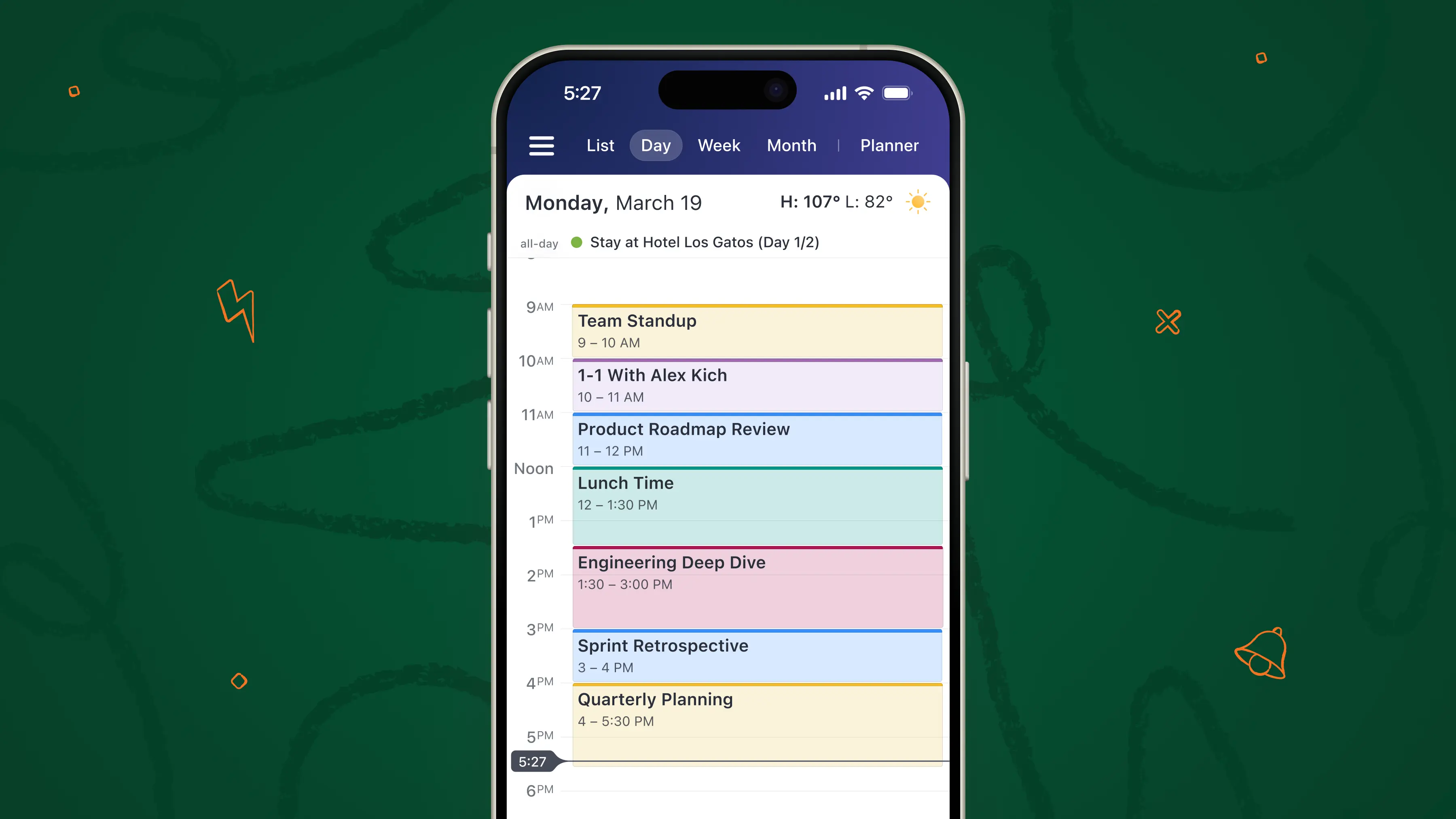
When your meetings run right into each other, it’s physically and mentally taxing in ways that add up fast.There’s no time to stand up or move your body, use the bathroom without rushing, grab water or a snack, or process what just happened in the last meeting.
Instead, you’re forced into instant context switching. Jumping from one topic, team, or problem to another with zero transition time. Your brain doesn’t get closure, which increases cognitive load and makes even simple decisions feel harder.
Over time, this creates a constant low-level stress response. You may notice brain fog by mid-day, irritability, and difficulty retaining information. This is one of the earliest job burnout symptoms. Not because you’re working too hard in one moment, but because your brain never gets a pause.
2. Lunch has disappeared from your schedule
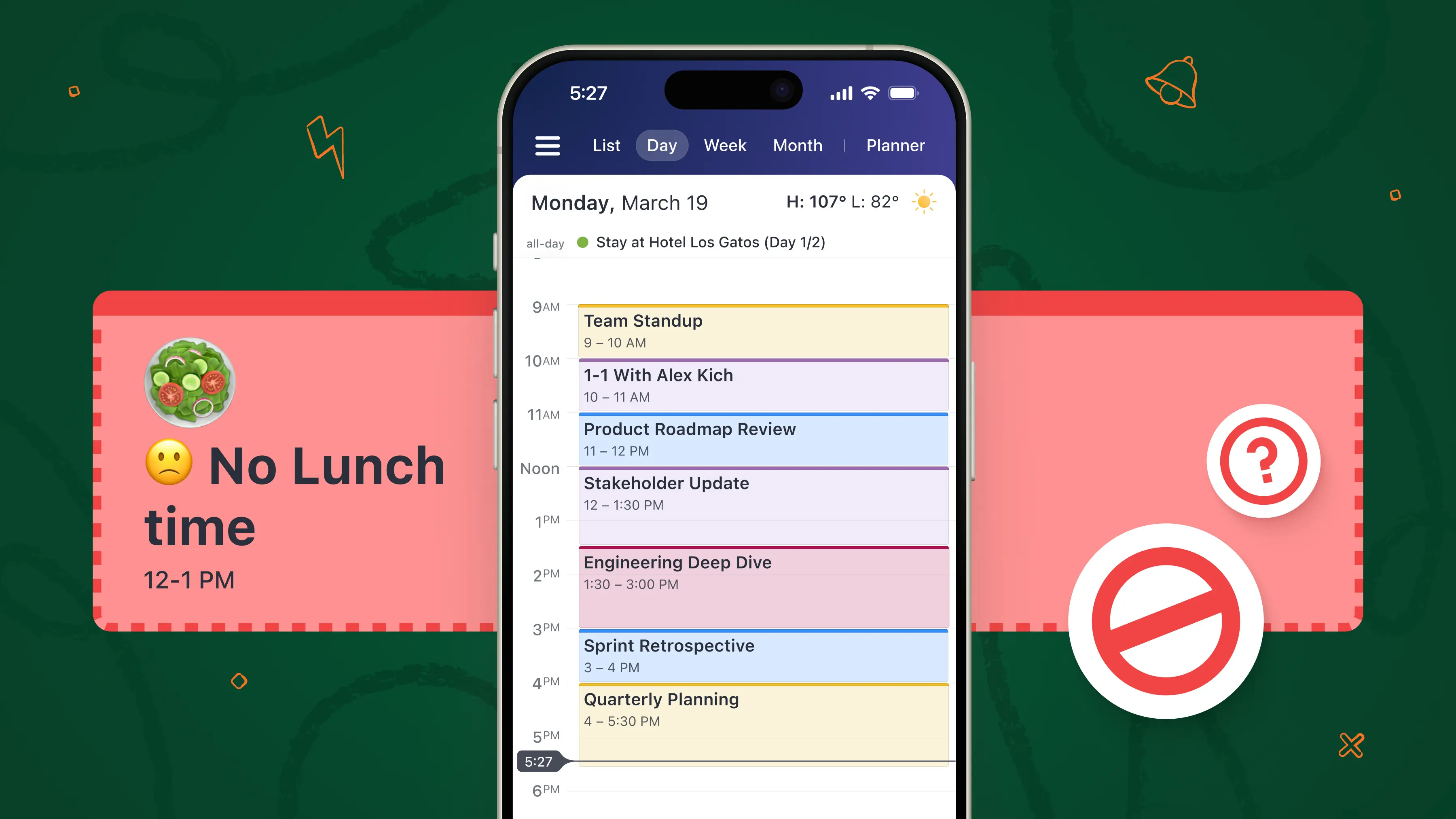
If your calendar doesn’t make space for lunch, your body pays the price, even if you don’t notice it immediately. Skipping meals or delaying them too long can spike cortisol (your stress hormone), lead to blood sugar crashes, contribute to headaches, and cause unintentional undereating or weight fluctuations over time.
Even if you are eating, but doing it while working, your body often stays in a “fight or flight” state instead of shifting into “rest and digest.” That means poorer digestion, less nutrient absorption, not feeling mentally recharged after eating.
3. Your weekends are no longer protected
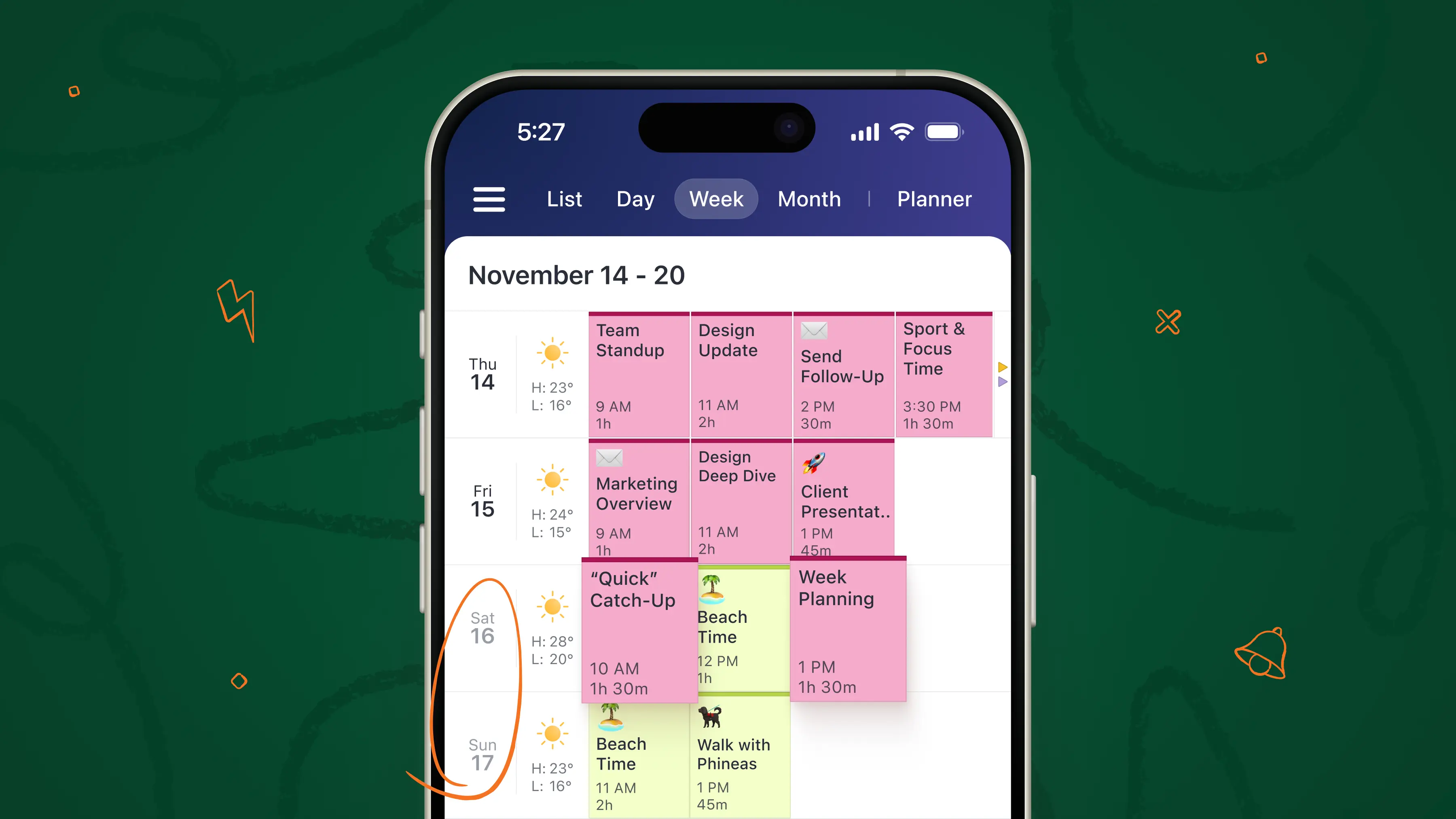
When occasional weekend work turns into a routine (5, 6, or even 7 days a week) it stops being a productivity strategy and becomes a chronic stress pattern. At that point, the issue isn’t just workload. It’s that your body and brain are no longer getting any full recovery cycle. Over time, that means your nervous system never resets.
Your body is designed to move between stress and recovery. When you work every day you stay in a prolonged activated state (elevated cortisol), your baseline stress level rises even during downtime, and relaxation starts to feel harder or even uncomfortable.
This is why people in this stage often say, “I don’t even know how to relax anymore.”
4. Your calendar is filled with “floating” or constantly rescheduled tasks
At first glance, rescheduling a task doesn’t seem like a big deal. But when the same tasks keep getting pushed from one day to the next like Monday to Tuesday, then to Friday, then into next week; it starts to reveal a deeper issue: your workload doesn’t actually fit into the time you have.
This creates a unique kind of stress. Even when you’re not actively working on those tasks, your brain is still tracking them in the background. That mental “open loop” builds pressure throughout the day, making it harder to focus on what’s in front of you. Instead of feeling productive, you feel like you’re constantly catching up to something that keeps moving.
Over time, this pattern can lead to decision fatigue, avoidance, and a persistent sense of being behind. It’s one of the more subtle work burnout symptoms. Not driven by intensity in a single moment, but by the ongoing weight of unfinished work that never fully clears.
5. Every day in your calendar looks exactly the same
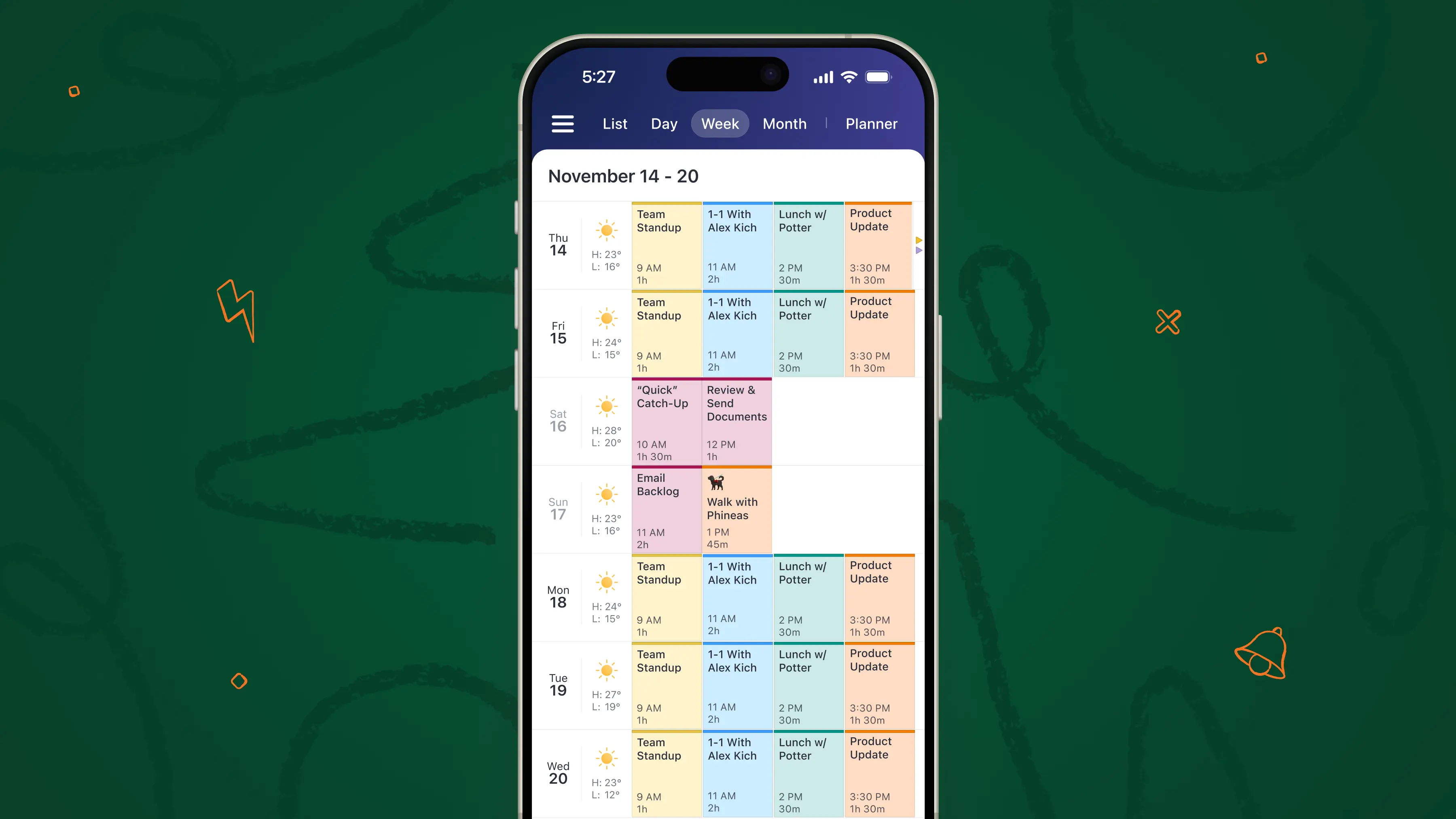
A packed day here and there is manageable. But when every single day in your calendar looks the same (as in fully booked, high-demand, and tightly scheduled), it removes variation.
Your energy naturally fluctuates, but your calendar doesn’t always reflect that. When there are no lighter days to balance heavier ones, your body never gets a chance to recalibrate. Instead, you’re operating at a consistently high output level with no built-in relief.
This kind of schedule can feel deceptively stable. You might think, “I’m handling it,” because there’s no single breaking point. But over time, the lack of variation leads to cumulative fatigue. Work starts to feel monotonous, your motivation drops, and even routine tasks can feel disproportionately draining.
6. Your calendar is full, but not with your priorities
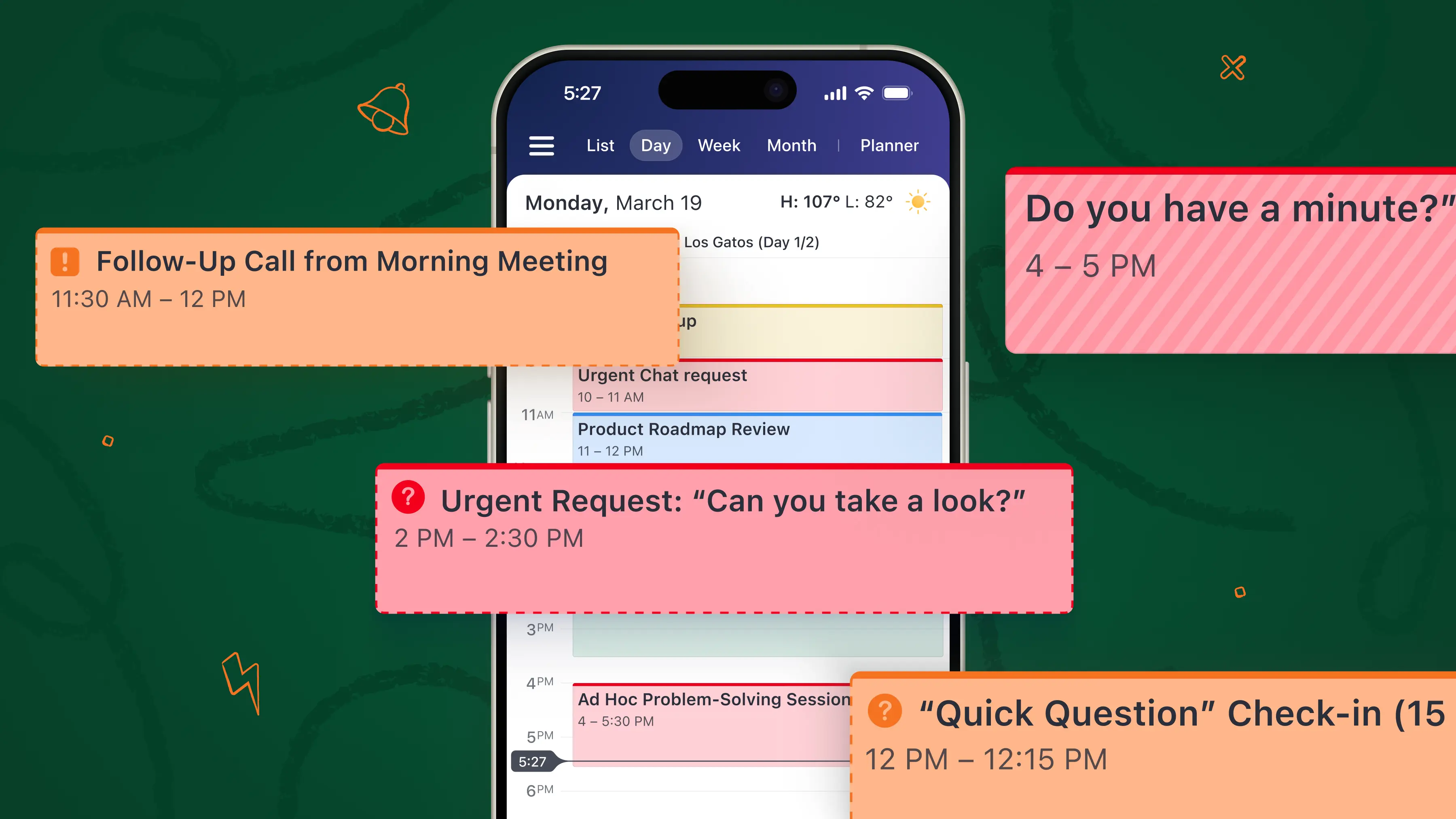
9:00 AM – Weekly Team Sync
10:00 AM – Project Status Update (Marketing Team)
10:30 AM – “Quick Question” Check-in (15 min)
11:30 AM – Internal Alignment Meeting
12:00 PM – Lunch (Working) / Email Catch-Up
12:30 PM – Urgent Request: “Can you take a look?”
1:30 PM – Follow-Up Call from Morning Meeting
2:00 PM – Ad Hoc Problem-Solving Session
2:30 PM – “Do you have a minute?” Chat
3:00 PM – Deadline Check-In Meeting
4:00 PM – Review Feedback / Revisions Needed
4:30 PM – End-of-Day Recap Meeting
5:00 PM – Respond to Pending Requests / Slack Catch-Up
You might be busy all day, but not with work that actually moves you forward. If your calendar is mostly filled with meetings you didn’t initiate, last-minute requests, or obligations that don’t align with your goals, it can start to feel like your time isn’t your own.
This pattern usually builds gradually. As your role grows, so does the volume of incoming requests and more expectations to be available. You say yes to be seen as reliable, and over time, your calendar becomes shaped by everything coming at you rather than what you intentionally planned. There’s often an unspoken pressure behind it, too. Such as not wanting to say no, wanting to prove your value, or equating responsiveness with being good at your job.
What makes this immensely draining is the loss of control. Having autonomy over your time is a key driver of motivation and well-being, and when that disappears, even a manageable workload can start to feel overwhelming. You may end the day feeling busy but not accomplished, and with your most important work constantly pushed to later or outside of work hours.
7. You avoid looking at your own calendar
Sometimes the clearest signal isn’t what’s in your calendar, it’s your reaction to it. If you find yourself avoiding opening your schedule or feeling a sense of dread every time you check what’s coming up, that’s not just a mindset issue, it’s a data point. Your calendar has likely become a source of pressure instead of support. When your workload or pace consistently feels unmanageable, even looking at your commitments can trigger stress. You might notice yourself procrastinating on planning, ignoring reminders, or mentally checking out before the day even begins. This is anticipatory stress and it often shows up before physical exhaustion fully sets in.
How to Deal With Work Burnout
Once you can see burnout patterns forming, you can start to interrupt them early with small changes that reduce overload before it becomes chronic.
Here are a few practical ways to start shifting your calendar immediately.
-
Audit your recent weeks: Look back at the last 1–2 weeks of your calendar and scan for patterns. Pay attention to where breaks disappeared, where meetings stacked without recovery time, and where work consistently spilled into evenings or weekends. This helps you see burnout as a trend.
-
Identify where recovery time is missing: Notice where your day has no space to reset. This could be missing lunch blocks, no gaps between meetings, or back-to-back high-intensity work sessions.
-
Rebuild small pockets of recovery into your day:
-
10–15 minute breaks between meetings.
-
A protected lunch block that cannot be moved.
-
Short pauses after emotionally or cognitively heavy calls.
-
Set clear meeting and workload boundaries:
-
Limit the number of meetings per day.
-
Protect at least one focus block daily.
-
Designate no-meeting windows or days when possible.
-
Batch similar work instead of scattering it throughout the week.
-
Protect at least one true recovery boundary each week: Whether it’s a full day off or a completely work-free block of time, this is what allows your system to reset instead of continuously accumulating stress.
Burnout is not a personal failure. It’s a systemic issue in the workplace. If your calendar is packed without breaks, boundaries, or space to reset, it will eventually lead to exhaustion. That’s why your calendar matters. It doesn’t just show what you’re doing, it shows how your time is being used and whether there’s enough space to recover.
The most important shift is instead of asking what’s wrong with you, you start asking what your schedule is asking you to sustain. That change alone makes it easier to adjust your workload and protect your energy.
If you want help seeing those patterns more clearly, Calendars by Readdle can help you track your schedule, spot overload early, and build a week with more balance and recovery built in.